Crystal Palace begin 2026/27 in a period of significant transition. The Eagles finished 15th in the Premier League last season but ended the campaign by winning their first European trophy, beating Rayo Vallecano 1-0 in the UEFA Conference League final. Oliver Glasner then departed, with Pierre Sage appointed as his replacement in June.
Sage inherits a squad accustomed to playing with three central defenders and attacking wing-backs, although several important pieces have changed. Marc Guéhi left for Manchester City in January, Maxence Lacroix departed this summer, and Brennan Johnson has also moved on.
Palace have responded by signing Óscar Mingueza and Takehiro Tomiyasu for the defence, while Dwight McNeil, Anan Khalaili and Zavier Gozo have strengthened the attacking options. Evann Guessand has also returned on loan after spending part of last season at Selhurst Park.
With another European campaign adding to the domestic schedule, Palace need more than a competitive starting XI. They need enough reliable alternatives to rotate without losing the qualities that made them dangerous last season.
Read Also: Chelsea Squad Depth 2026/27: Strengths, Weaknesses and Season Outlook
Crystal Palace’s 2026/27 Squad at a Glance
Palace’s main first-team options currently include:
Goalkeepers: Dean Henderson, Walter Benítez, Remi Matthews
Central defence: Chris Richards, Jaydee Canvot, Chadi Riad, Takehiro Tomiyasu, Óscar Mingueza
Right wing-back/right-back: Daniel Muñoz, Mingueza, Tomiyasu
Left wing-back/left-back: Tyrick Mitchell, Borna Sosa
Central midfield: Adam Wharton, Daichi Kamada, Jefferson Lerma, Will Hughes, Justin Devenny
Wide/advanced attack: Ismaïla Sarr, Yéremy Pino, Dwight McNeil, Evann Guessand, Anan Khalaili, Zavier Gozo, Matheus França
Centre-forward: Jean-Philippe Mateta, Jørgen Strand Larsen, Eddie Nketiah
The transfer window remains open, so Palace’s final squad could still change.
Goalkeeper Depth
Dean Henderson remains the clear first choice. His experience, shot-stopping, and leadership were all important during Palace’s successful European run, and he has become one of the senior figures in the team. Walter Benítez provides experienced cover and featured regularly when Palace rotated last season.
That gives Sage a reliable No. 2 rather than an inexperienced goalkeeper who would require the entire defensive setup to change. Remi Matthews provides further cover. Henderson would still be difficult to replace over a long period, but goalkeeper is not an obvious squad weakness.
Depth Assessment: Strong
Defensive Depth
1. Centre-Back Options
This is the most important area to assess because Palace have lost both Guéhi and Lacroix within the past year. Chris Richards is now one of the senior defensive figures and offers athleticism, aggression and experience within a back three.
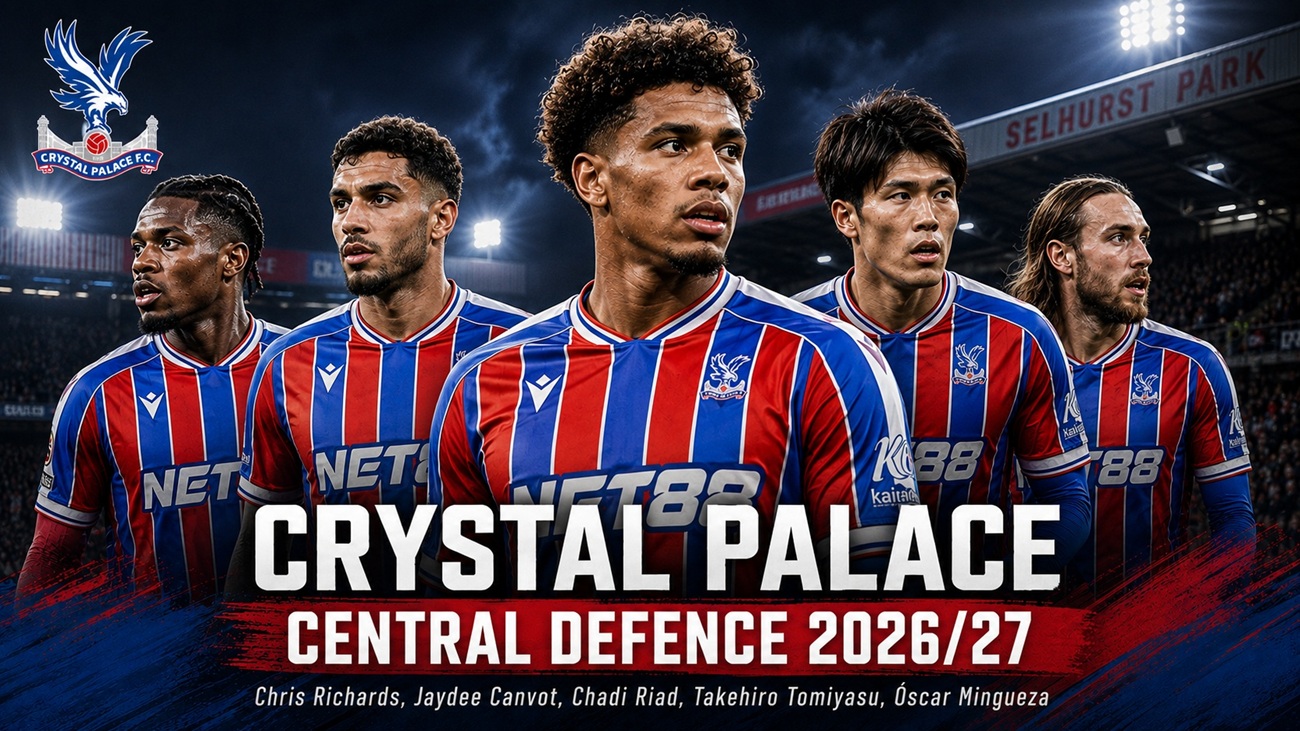
Jaydee Canvot made significant progress last season and became trusted enough to start major matches, including the Conference League final. He now has the opportunity to move from promising young defender to established first-team player. Palace have also added Tomiyasu and Mingueza.
Tomiyasu’s main value is versatility. He can operate centrally or on the right and has experience defending in several different structures. Mingueza can similarly play as a centre-back or wider defender, giving Sage flexibility if he continues with three at the back.
Chadi Riad should also form part of the central defensive group, but immediate availability is now a concern after he suffered a knee injury during Palace’s opening Premier League defeat at Everton. That injury highlights the main question surrounding this department.
Palace have enough defenders on paper, but losing Riad so soon after Lacroix’s departure reduces the margin for further injuries. Another absence would place heavy responsibility on Richards, Canvot and the new arrivals.
Depth Assessment: Adequate to Strong when everyone is available
Read Also: Brighton & Hove Albion Squad Depth 2026/27: Strengths, Weaknesses and Season Outlook
2. Wing-Back and Full-Back Options
Daniel Muñoz remains one of Palace’s most valuable players. His energy, attacking runs and ability to arrive in scoring positions make him particularly effective as a wing-back rather than a conventional stay-at-home full-back. Mingueza and Tomiyasu give Sage alternatives on that side, although neither provides the same attacking threat as Muñoz.
Tyrick Mitchell remains the established option on the left, with Borna Sosa providing more attack-minded cover. The first choices are strong. The issue is that Palace’s system places considerable physical demands on the wing-backs, especially during weeks containing European fixtures. Muñoz and Mitchell cannot realistically be expected to play every important match across several competitions.
Depth Assessment: Adequate
Midfield Depth
Adam Wharton remains central to how Palace progress the ball. His passing range allows the Eagles to turn defensive recoveries into attacks quickly, while his ability to find forwards between and behind opposition lines was a major feature of last season’s European success. He was named Player of the Match in the Conference League final.
Daichi Kamada offers a different profile. He can play deeper alongside Wharton or move closer to the forwards, giving Sage an option when Palace need more movement between the lines. Jefferson Lerma provides physicality and defensive strength, while Will Hughes offers experience and ball retention.
Justin Devenny adds further depth and should continue receiving opportunities after becoming more involved with the senior team. The midfield is well balanced, but Wharton remains difficult to replace. Palace have players who can occupy his position, yet none offers the same progressive passing.
Depth Assessment: Strong
Attacking Depth
Attack is where Palace have the greatest number of options. Yéremy Pino and Ismaïla Sarr already understand the demands of playing behind or alongside a central striker. Sarr was especially influential in Europe last season, finishing as the Conference League’s leading scorer with nine goals.
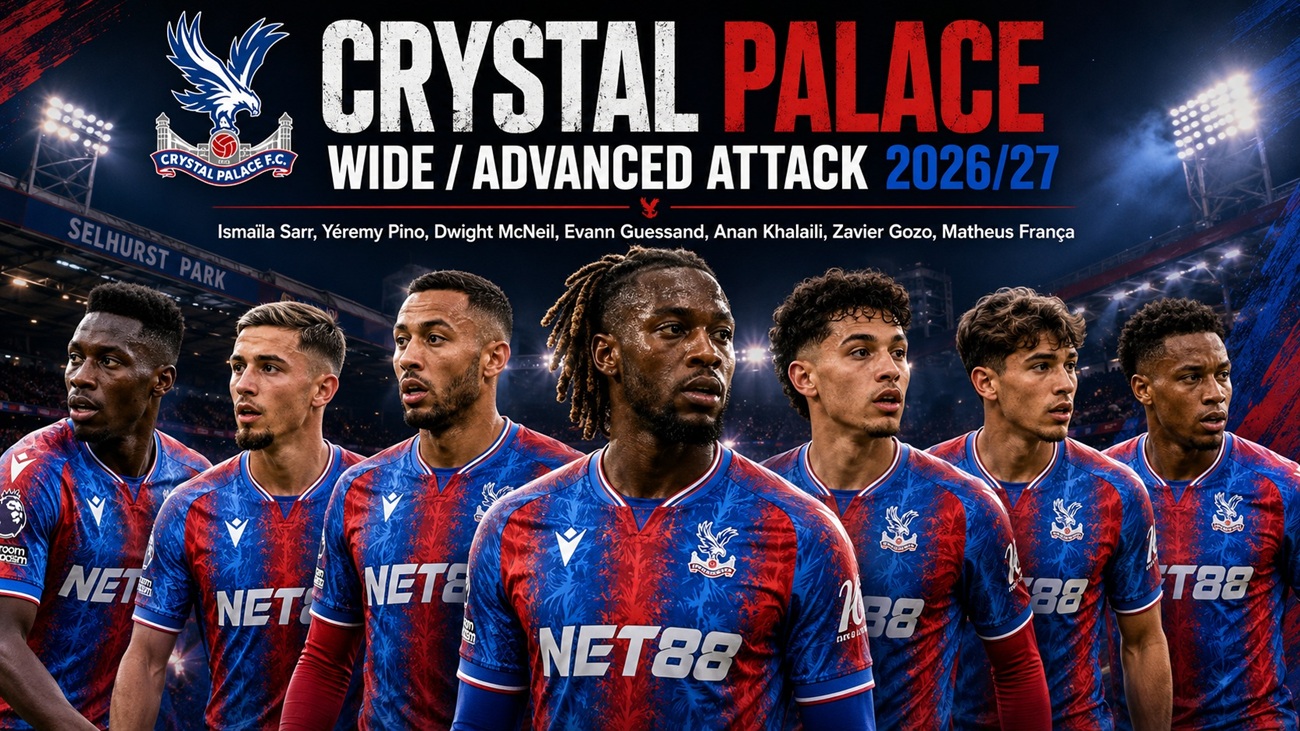
Dwight McNeil gives Palace another proven Premier League attacker capable of playing wide or in more central creative areas. Guessand’s return increases the options further. He can play across the frontline and already has experience within the Palace setup. Anan Khalaili and Zavier Gozo represent younger additions with potential, while Matheus França remains another attacking option.
Sarr missed the opening league match against Everton with a groin injury, but Palace now have enough alternatives that one missing wide attacker should not completely change the team. The main challenge will be establishing a hierarchy. Sage has plenty of forwards, but not all of them can receive regular minutes.
Depth Assessment: Very Strong
Read Also: Brentford Squad Depth 2026/27: Strengths, Weaknesses and Season Outlook
1. Centre-Forward Options
Centre-forward may be Palace’s deepest individual attacking position. Jean-Philippe Mateta remains the leading option and scored the goal that won the Conference League final. Jørgen Strand Larsen provides a more physical alternative and gives Palace another striker comfortable occupying centre-backs and attacking crosses.
Eddie Nketiah offers different movement, particularly when Palace want a forward capable of making sharper runs behind the defence. Having three established senior strikers means Sage should be able to rotate without asking a winger to operate as an emergency No. 9.
The challenge is using them effectively. Palace will not always require two strikers, so one or more could spend significant periods outside the strongest XI.
Depth Assessment: Very Strong
How Much Quality Is There Beyond the Starting XI?
Palace have greater attacking depth than defensive depth. A possible first-choice group could contain Henderson; Richards, Canvot and Tomiyasu; Muñoz, Wharton, Kamada and Mitchell; Pino and Sarr behind Mateta. Even then, Sage could turn to Mingueza, Lerma, Hughes, McNeil, Guessand, Strand Larsen and Nketiah.
That is a strong bench. The concern emerges when several defenders are unavailable simultaneously. Palace have enough players to absorb one absence, but the quality drop becomes more noticeable after that. In attack, the opposite is true. Sage may actually have more credible forwards than he can regularly use.
Where Palace Are Strongest
Centre-forward stands out immediately. Mateta, Strand Larsen and Nketiah give Palace three experienced options with different qualities.
Supporting attack is similarly deep. Pino, Sarr, McNeil, Guessand and several younger players mean Sage can change the frontline without relying on emergency solutions.
Central midfield is also well balanced, with Wharton, Kamada, Lerma and Hughes offering different combinations depending on the opponent.
Where Palace Look Vulnerable
Central defence is the clearest concern. Guéhi and Lacroix have both left, and Riad’s fresh knee problem immediately tests the replacements. Tomiyasu and Mingueza improve the numbers, but Sage is still integrating a new defensive unit while beginning his first Premier League campaign.
Wing-back is another area where quantity can be misleading. Palace can cover Muñoz and Mitchell, but replacing their natural attacking contribution is more difficult. This becomes particularly important when European fixtures create short recovery periods.
Read Also: AFC Bournemouth Squad Depth 2026/27: Strengths, Weaknesses and Season Outlook
Key Players for Squad Stability
1. Adam Wharton
Palace have several midfielders, but Wharton remains their best progressive passer. Losing him would affect how quickly the team moves from defensive possession into attack.
2. Daniel Muñoz
His attacking contribution from wing-back gives Palace an extra runner that opponents must track. The alternatives can fill the position, but they do not reproduce his movement exactly.
3. Jean-Philippe Mateta
Palace possess excellent striker depth, yet Mateta remains the most established focal point and has repeatedly delivered in major matches.
How Versatility Strengthens the Squad
Sage has several players capable of solving more than one problem. Tomiyasu can play centrally or at right-back. Mingueza offers similar flexibility. Kamada can move between central and attacking midfield, while Guessand can operate across the forward line.
McNeil can start wide or move into more creative positions depending on Palace’s formation. That versatility matters because Sage has continued using a three-defender structure during much of his early work at Palace, maintaining several principles familiar from the Glasner era rather than immediately rebuilding the tactical system.
How Injuries Could Test Palace
Palace’s season has already provided an early example. Sarr missed the Premier League opener with a groin issue, while Riad suffered a knee injury during the 2-0 defeat at Everton. The attacking absence is relatively easy to cover because Sage has several forwards.
Riad’s injury is more significant because central defence was already undergoing major change. If Richards, Canvot, Tomiyasu and Mingueza remain available, Palace should cope. Multiple defensive injuries at the same time would create a much more serious problem. That is where the squad remains most vulnerable.
European Football and Rotation
Last season showed how demanding a European campaign can become. Palace played 60 matches across all competitions before ending the season with the Conference League final. Another continental campaign means rotation will again be essential. League matches will regularly arrive shortly after European fixtures, while the FA Cup and EFL Cup add further demands.
Palace look better prepared in attack than they did previously. Sage can rotate Mateta, Strand Larsen and Nketiah or change the players supporting them without dramatically weakening the frontline. Defence is more difficult. If Palace progress deep into Europe again, Tomiyasu, Mingueza and the younger defenders may become just as important as the nominal starters.
Can Crystal Palace Compete on Multiple Fronts?
The squad is capable of handling multiple competitions, but the balance is uneven. Attacking depth is excellent. Midfield is strong enough for rotation. Goalkeeper is secure. Defence carries more uncertainty following the departures of two major centre-backs.
There is also a managerial transition to consider. Sage has inherited a squad built largely around Glasner’s methods, and although his early use of a back three should make the adjustment easier, his own ideas will develop as the season progresses.
Palace therefore appear capable of another competitive cup and European campaign, but maintaining league performance at the same time may depend heavily on defensive availability.
Overall Squad Depth Assessment
Overall Assessment: Strong Depth With Defensive Questions
Crystal Palace have enough first-team quality to rotate in most areas without a major drop. Attack is the standout strength, with three senior centre-forwards and numerous players capable of operating around them. Midfield is similarly well balanced.
The biggest uncertainty is central defence, where the departures of Guéhi and Lacroix have forced Palace to establish a new hierarchy. Riad’s early injury only increases that concern. The transfer window remains open, so another defensive addition could significantly improve the overall balance.
Conclusion
Crystal Palace’s 2026/27 squad is deeper than their 15th-place league finish last season might suggest, particularly in attack. Pierre Sage has Mateta, Strand Larsen and Nketiah at centre-forward, with Pino, Sarr, McNeil, Guessand and several younger attackers providing substantial support.
Wharton, Kamada and Lerma also give Palace a strong midfield core. The main question is defence. Guéhi and Lacroix are gone, Riad has suffered an early injury, and new arrivals Tomiyasu and Mingueza must quickly settle into the structure.
Overall, Palace have enough quality to compete across domestic and European competitions, but their ability to handle another congested campaign may depend less on attacking depth and more on keeping their rebuilt defence available.