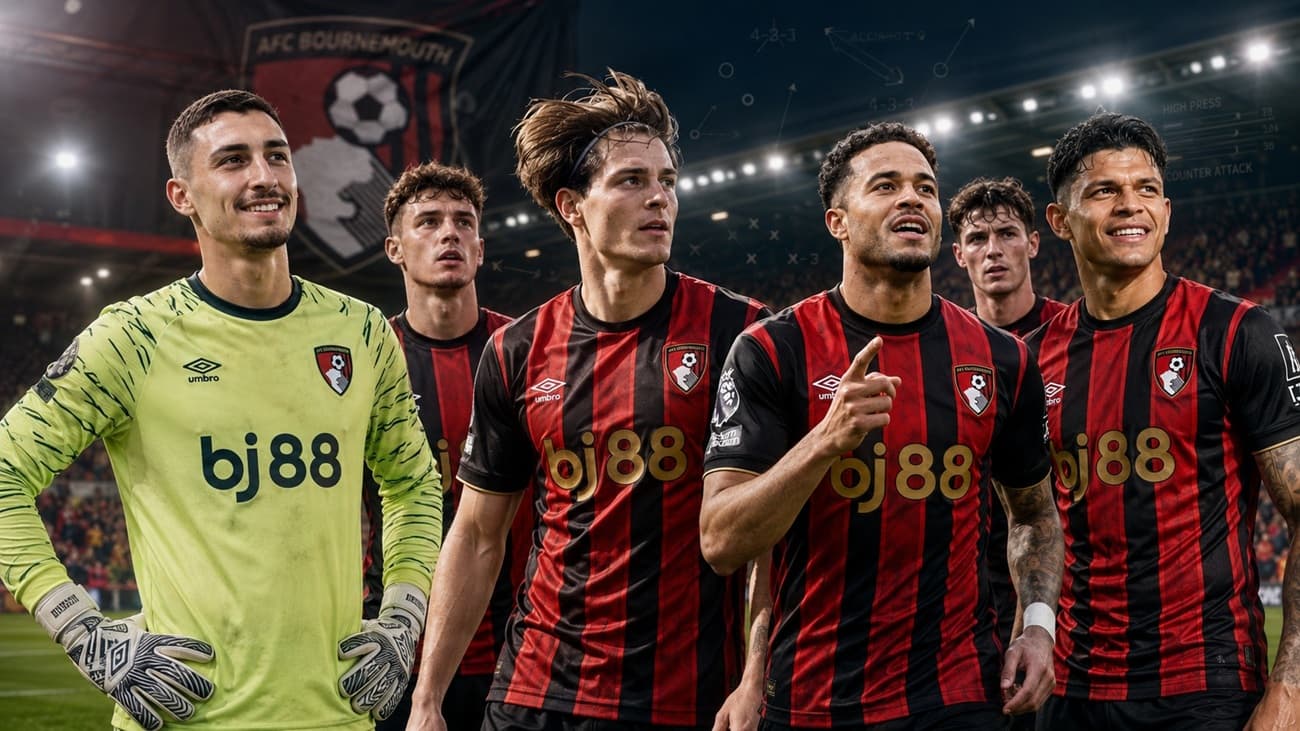
AFC Bournemouth enter the 2026/27 season facing perhaps the biggest test of squad depth in the club’s history. A sixth-place Premier League finish in 2025/26 secured European qualification for the first time, meaning Bournemouth must now balance domestic football with eight UEFA Europa League league-phase fixtures before any potential knockout matches are considered.
There is also a major change in the dugout. Marco Rose has replaced Andoni Iraola after the Spaniard left for Liverpool, but Bournemouth have deliberately chosen a manager whose high-intensity, aggressive pressing philosophy should make the tactical transition less disruptive than a complete change of footballing identity.
António Silva, Álvaro Rodríguez and Juanlu Sánchez have strengthened the squad this summer, while Marcos Senesi and Enes Ünal are among the departures. The transfer window remains open until September 1, so further movement is possible.
Bournemouth have enough talent to be competitive again. The more difficult question is whether Rose has enough quality across every position to cope with Premier League weekends, Thursday-night European football and the inevitable injuries that accompany a congested season.
Read Also: Aston Villa Squad Depth 2026/27: Strengths, Weaknesses and Season Outlook
Bournemouth’s 2026/27 Squad at a Glance
Bournemouth’s current senior options can broadly be organised as follows:
Goalkeepers: Đorđe Petrović, Fraser Forster, Will Dennis
Right-backs: Juanlu Sánchez, Adam Smith, Max Aarons, Julián Araujo
Centre-backs: António Silva, Bafodé Diakité, James Hill, Veljko Milosavljević, Matai Akinmboni
Left-backs: Adrien Truffert, Julio Soler
Central/defensive midfield: Tyler Adams, Alex Scott, Lewis Cook, Ryan Christie, Alex Tóth, Ben Winterburn
Attacking midfield: Justin Kluivert, Junior Kroupi, Marcus Tavernier, Alex Scott
Wide attack: Rayan, Ben Gannon-Doak, Amine Adli, David Brooks, Tavernier
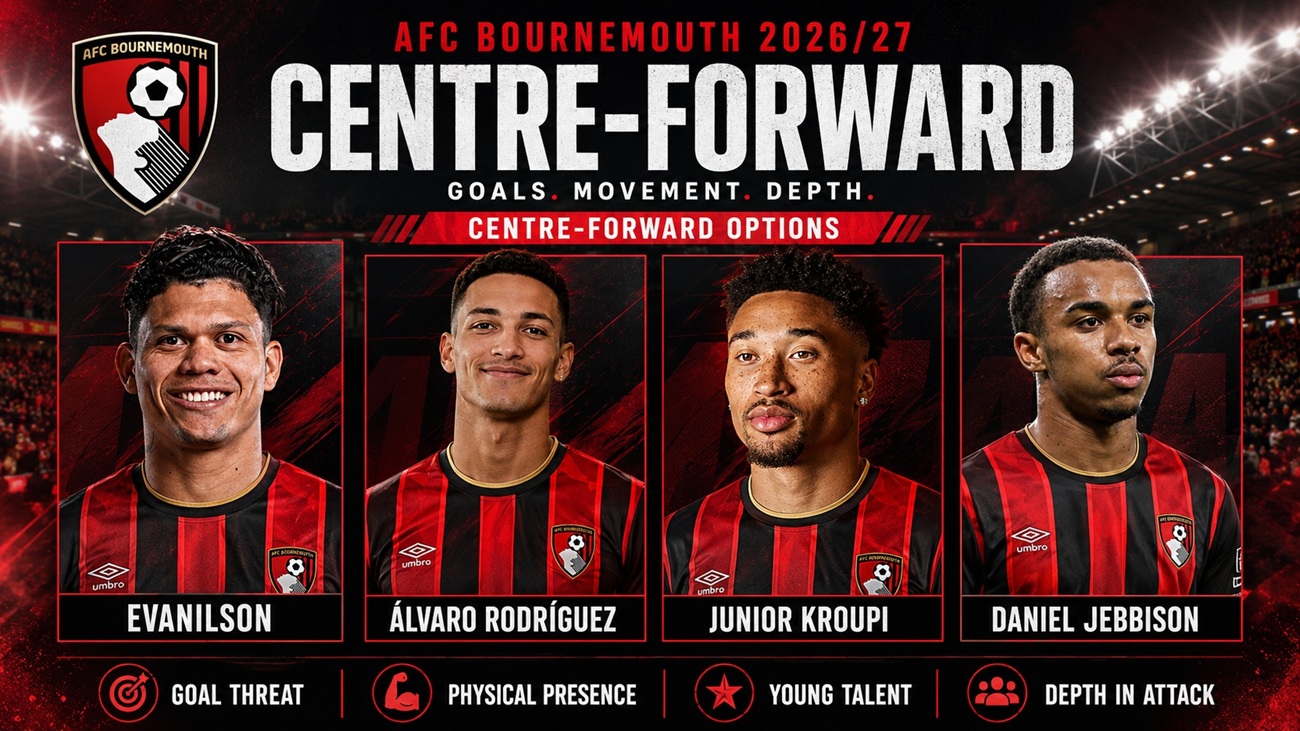
Centre-forward: Evanilson, Álvaro Rodríguez, Junior Kroupi, with Daniel Jebbison also available within the wider group
Not every option carries the same importance, and several players are currently unavailable. Kroupi is expected to miss a significant portion of the opening months after foot surgery, while Milosavljević and Araujo have also been dealing with injuries. That means Bournemouth’s squad on paper is deeper than the group Rose can immediately select.
Goalkeeper Depth
Đorđe Petrović is firmly established as Bournemouth’s first-choice goalkeeper. The Serbian started all 38 Premier League matches last season and became an important part of a team that ultimately finished sixth. His athleticism and willingness to defend space are valuable behind a Bournemouth side that wants to press aggressively and often commits players forward.
Fraser Forster provides experienced cover after extending his stay into 2026/27. At 38, he is unlikely to challenge Petrović for the position across an entire campaign, but he gives Rose an experienced goalkeeper for cup matches and emergencies.
Will Dennis provides further depth, although his recent ankle problem means his immediate availability should not simply be assumed. There would be a noticeable drop if Petrović missed an extended run because Bournemouth do not possess another goalkeeper at the same stage of his career, but the presence of Forster means Rose would not be forced to rely entirely on youth.
Depth Assessment: Adequate
Defensive Depth
1. Centre-Back Options
The most significant defensive change is the departure of Marcos Senesi. Senesi missed only one Premier League game last season and was voted Bournemouth’s Players’ Player of the Year, so replacing him required more than adding another squad defender. António Silva is the answer.
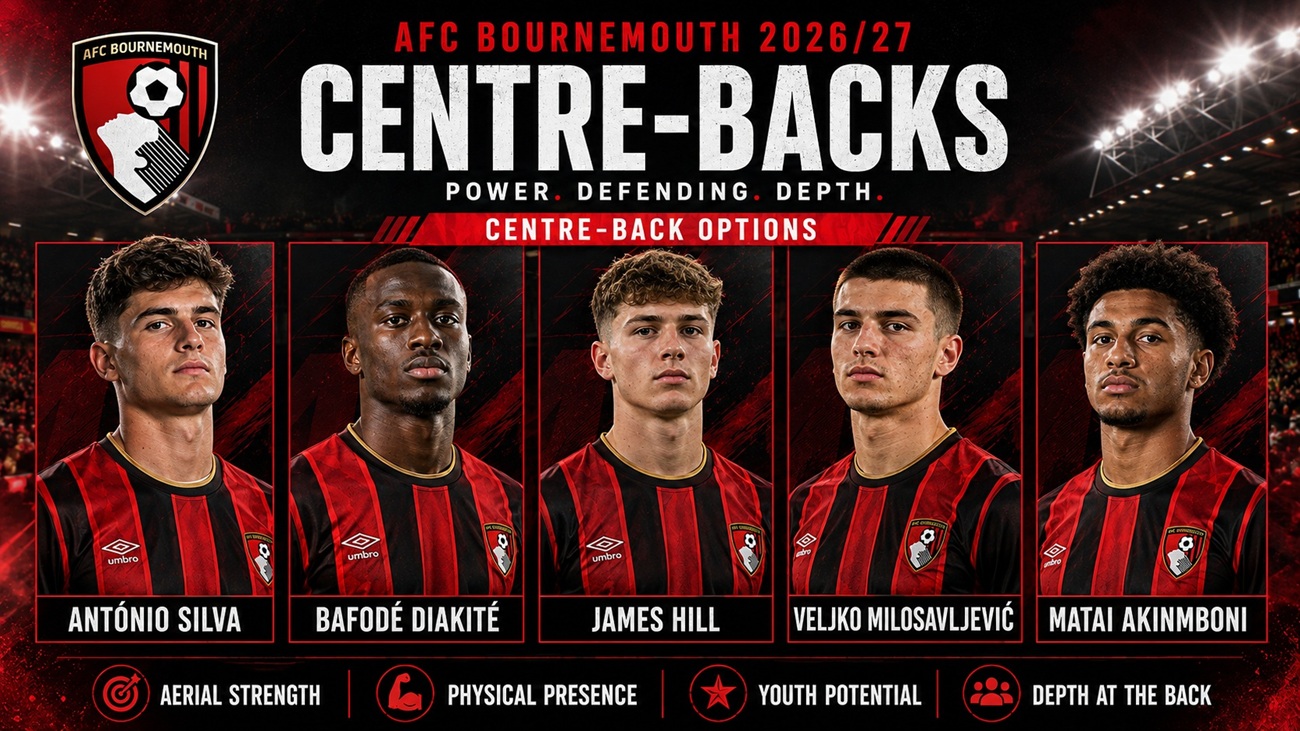
Bournemouth signed the Portugal international from Benfica in August. Despite being only 22, Silva arrived with extensive senior experience in domestic and European competition, making him a potential first-choice defender rather than simply cover. Bafodé Diakité should compete to start alongside him and already understands the physical demands of Premier League football.
James Hill provides another credible option and showed last season that he can contribute when required. Veljko Milosavljević is one of Bournemouth’s most highly regarded young defenders, but his current knee injury means he cannot be counted as immediately available depth. Matai Akinmboni adds another young option but should still be viewed as developmental cover rather than someone Bournemouth should expect to start repeatedly in major Europa League fixtures.
This is therefore an interesting group. Silva and Diakité could become a strong first-choice partnership, but an injury to either before Milosavljević returns would quickly increase the importance of Hill. Bournemouth have numbers, but not yet an abundance of proven senior centre-backs.
2. Full-Back Options
The right side has been strengthened considerably. Juanlu Sánchez has arrived permanently from Sevilla after making more than 100 senior appearances for the Spanish club. His athleticism and ability to advance down the flank make him a natural candidate for significant minutes under Rose.
Adam Smith remains enormously valuable. The club captain is now 35 but has extended his contract through 2027 and provides experience across the back line. Max Aarons has returned after his Rangers loan and provides another natural right-back, while Araujo also remains contracted to Bournemouth but is currently sidelined.
On the left, Adrien Truffert is the clear first-choice option after an excellent 2025/26 campaign in which he featured throughout the league season. Julio Soler provides younger backup. The imbalance is noticeable: Bournemouth have several right-back possibilities but considerably less established cover behind Truffert on the left.
Depth Assessment: Strong at right-back; Adequate at centre-back and left-back
Read Also: Arsenal Squad Depth 2026/27: Strengths, Weaknesses and Season Outlook
Midfield Depth
Midfield may be Bournemouth’s most dependable area. Alex Scott was outstanding last season, appearing in every Premier League match and winning the club’s Supporters’ Player of the Year award. He combines ball carrying, progression and the ability to play at the tempo demanded by Bournemouth’s pressing game.
Tyler Adams provides the defensive intensity around him. His anticipation and ability to cover ground are particularly useful for a side willing to press high and accept transitional situations. Lewis Cook offers experience, passing and positional discipline, while Ryan Christie brings another high-energy option capable of playing centrally or in more advanced positions.
Alex Tóth is particularly interesting for the longer term. The Hungarian joined in January 2026 and should have increased opportunities now that European matches have expanded the calendar. Rose therefore has several combinations available.
He could use Adams and Scott as a balanced double pivot, introduce Cook when greater control is required, or push Scott higher while using Christie or Tóth alongside Adams. What Bournemouth lack is not midfield quantity but a direct replacement for Scott’s complete influence. Several players can perform parts of his role, but few combine his progression, technical quality, and intensity at the same level.
Depth Assessment: Strong
Attacking Depth
1. Wide and Creative Options
Bournemouth’s attacking depth is built around young players with high ceilings. Rayan has rapidly become one of the most important attackers in the squad. His development since arriving from Vasco da Gama has been significant enough to earn senior Brazil recognition, and he started at the 2026 World Cup before returning to Bournemouth for the new campaign.
His ability to carry the ball, attack defenders and operate across the frontline fits Rose’s preference for fast vertical attacks. Ben Gannon-Doak is another player who could become much more important this season. Injuries restricted him to limited Premier League minutes in 2025/26, but he has returned strongly and gives Bournemouth a natural one-versus-one winger with considerable pace.
Justin Kluivert can play centrally or from wider starting positions, making him particularly valuable within Rose’s preferred narrow attacking structures. Amine Adli, David Brooks and Marcus Tavernier provide further options. All three offer different qualities: Adli can attack space, Brooks supplies creativity and composure, while Tavernier brings intensity and tactical flexibility. There is enough depth here to rotate without Bournemouth completely losing their attacking identity.
Depth Assessment: Strong
2. Centre-Forward Options
The centre-forward picture is more complicated because Junior Kroupi is unavailable. Kroupi scored 13 Premier League goals during his breakthrough 2025/26 campaign and became one of Bournemouth’s most valuable attacking players. He could operate as a striker or in the space behind the No. 9, making him particularly suitable for Rose’s possible 4-2-2-2 variations.
His foot injury is therefore a major blow. Evanilson remains the established senior striker and should begin as first choice. His movement and pressing make him valuable even when he is not scoring heavily. Bournemouth anticipated the need for further competition by signing Álvaro Rodríguez from Elche. The Uruguayan forward scored seven La Liga goals.
He supplied five assists last season, giving Rose a more physically imposing attacking option who can compete with Evanilson or potentially play alongside him. Enes Ünal can no longer be counted in the depth chart after completing his return to Getafe in August. Until Kroupi returns, Bournemouth have credible striker depth, but they have lost one of their most productive goal threats.
Depth Assessment: Adequate while Kroupi is injured; Strong when fully fit
Read Also: Atlético Madrid Sign Cristian Romero: €40m Tottenham Transfer Explained
How Much Quality Is There Beyond the Starting XI?
Bournemouth’s strongest XI under Rose is not yet settled. A possible team could feature Petrović; Juanlu, António Silva, Diakité and Truffert; Adams and Scott; Rayan, Kluivert and Tavernier; with Evanilson leading the line. That could leave players such as Smith, Hill, Cook, Christie, Tóth, Gannon-Doak, Adli and Álvaro Rodríguez outside the XI.
Once Kroupi and Milosavljević return, the competition increases further. That is a meaningful amount of depth. The concern is that quality is not distributed evenly. Bournemouth can change two or three midfielders or attackers without radically weakening the team. Still, the same cannot necessarily be said if injuries accumulate at centre-back or left-back.
Where the Squad Is Strongest
Central midfield is arguably Bournemouth’s deepest area. Scott, Adams, Cook, Christie and Tóth allow Rose to rotate while retaining energy and technical quality.
Wide attack is another strength. Rayan, Gannon-Doak, Adli, Brooks and Tavernier provide different combinations of pace, dribbling and creativity.
Right-back depth is also substantial following Juanlu’s arrival. Smith, Aarons and eventually Araujo give Rose several alternatives.
The significance of those options should become clear during Europa League weeks, when Bournemouth may need five or six changes between Thursday and Sunday.
Where the Squad Looks Vulnerable
Left-back has the clearest specialist drop-off. Truffert played almost every Premier League minute available to him last season, and Bournemouth do not possess an equally established alternative. Soler has potential, but asking him to reproduce Truffert’s level repeatedly would be a substantial responsibility.
Centre-back is another area to monitor until Milosavljević returns. Silva, Diakité and Hill provide a reasonable senior group, but two simultaneous injuries would significantly reduce Rose’s choices. Kroupi’s absence also temporarily lowers attacking depth. Bournemouth have other forwards, but his ability to score while operating between midfield and attack is difficult to replicate directly.
Key Players for Squad Stability
1. Alex Scott
Scott is more than another midfielder. His ability to receive under pressure, carry possession through lines, and contribute to Bournemouth’s press makes him central to the team’s balance. Bournemouth have publicly resisted interest in him this summer, illustrating how important he is to the project.
2. Rayan
Rayan gives Bournemouth an individual threat capable of changing matches without needing prolonged possession. Against stronger European opponents, that ability to turn a transition into a genuine chance could be particularly valuable.
3. Đorđe Petrović
Bournemouth’s aggressive defensive approach places responsibility on the goalkeeper. Petrović’s reliability across an entire league season means losing him would produce one of the bigger quality drops in the squad.
How Positional Versatility Strengthens the Squad
Rose should benefit from several players who can change roles without forcing a substitution. Kluivert can operate centrally or wider. Tavernier can play as a winger, attacking midfielder, or deeper when required. Scott can operate in a double pivot or advance into a No. 8 role.
Kroupi, once fit, can play as a centre-forward, second striker or advanced midfielder. Smith’s defensive experience also allows him to cover more than one position, while Aarons has played on either side of defence. This versatility matters because Rose has historically moved between structures such as 4-2-3-1, 4-4-2 and 4-2-2-2 rather than committing to one rigid formation.
Young Players Who Could Add Depth
Bournemouth are in an unusual position because several of their young players are already central to the senior team. Rayan and Kroupi are established first-team contributors rather than speculative academy prospects. Milosavljević has also moved closer to meaningful senior involvement and was included alongside Rayan and Kroupi on the 2026 Golden Boy shortlist.
Alex Tóth should receive more minutes because of the expanded schedule, while Akinmboni may be required during cup matches or defensive injury periods. The challenge is not finding young talent. It is avoiding the assumption that potential automatically equals reliable depth when Bournemouth are preparing for their first season in European competition.
Read Also: Does the Community Shield Determine Premier League Season Performance?
How Injuries Could Test the Squad
Kroupi’s absence provides the first major example. On paper, Bournemouth have several forwards. In practice, one of last season’s leading scorers is missing for the opening months, meaning more responsibility falls on Evanilson, Rodríguez, Kluivert and Rayan. Defence presents a similar issue.
Milosavljević’s knee injury reduces centre-back depth, while Araujo’s absence further limits Rose’s options despite Bournemouth having several contracted right-backs. One injury in most positions should be manageable. Two or three absences concentrated in central defence or at left-back could be much more serious, particularly during weeks involving Europa League travel.
Fixture Congestion and Rotation
Bournemouth have never experienced a schedule like the one awaiting them. Europa League participation guarantees eight league-phase fixtures between September and January. Most of those matches will be played on Thursdays, creating repeated Thursday-Sunday turnarounds in the Premier League. The FA Cup and EFL Cup add further matches.
If Bournemouth progress into the Europa League knockout stages, their competitive total could comfortably exceed 50 games. That changes what counts as a useful squad player. Cook, Brooks, Tóth, Hill, Smith and Rodríguez may not all belong in Rose’s strongest XI, but they could become extremely important when recovery time is limited. Rose also brings substantial European experience from his previous coaching roles, which should help with the tactical and physical management of the schedule.
Can Bournemouth Compete on Multiple Fronts?
Bournemouth appear capable of competing across the Premier League and Europa League, but doing so without sacrificing league performance will require intelligent rotation. Their midfield and attacking depth provide reason for confidence. Rose can make several changes while still selecting experienced Premier League players.
European competition could actually benefit players such as Gannon-Doak, Tóth and Rodríguez by giving them consistent opportunities that would otherwise be difficult to guarantee. The danger comes if Bournemouth progress deeply while injuries reduce the defence.
A Thursday-night away fixture in continental Europe followed by a Premier League game less than three days later is very different from managing one match per week. Rotation becomes a necessity rather than a luxury. The squad appears capable of handling that challenge, but it does not have the almost interchangeable depth available to England’s wealthiest clubs.
Where the Squad Could Still Be Strengthened
Another centre-back would make sense if Bournemouth wants greater protection against injuries. Silva is an excellent replacement for Senesi, but replacing one starter does not automatically increase depth. With Milosavljević currently unavailable, an additional senior defender could prevent Rose from being forced into emergency reshuffles.
Left-back is another area where greater competition would help. Truffert is a reliable starter, but Bournemouth would benefit from having an alternative closer to his current level. The club does not urgently need another striker following Rodríguez’s arrival, particularly with Kroupi expected to return later in the season.
Overall Squad Depth Assessment
Overall Assessment: Good Depth With Specific Vulnerabilities
Bournemouth have built a squad capable of approaching their first European season with legitimate ambition. Midfield is strong, wide attacking options are plentiful, and the arrival of Rodríguez ensures Evanilson is no longer the only established senior striker available during Kroupi’s recovery.
António Silva should help compensate for Senesi’s departure, while Juanlu significantly improves the right-back options. The concerns are concentrated in defence. Centre-back depth becomes less convincing after one or two injuries, while Truffert does not have an equivalent established replacement at left-back. For a normal Premier League season, Bournemouth’s depth would look comfortable. Adding Europa League football changes the standard required.
How Squad Depth Could Shape Bournemouth’s 2026/27 Season
Bournemouth’s 2026/27 campaign may ultimately be defined by how successfully Rose manages the squad between European and domestic matches. The club no longer needs merely enough players to survive injuries. It needs two groups capable of contributing regularly without the intensity of the team collapsing.
Scott, Adams and Rayan remain central figures, but Rose cannot ask them to carry the same workload every week from August through May. That creates opportunities for Gannon-Doak, Tóth, Rodríguez and others to become more important than conventional substitutes.
If Bournemouth can maintain defensive availability and Kroupi returns without complications, the squad has enough quality and flexibility to remain competitive while embracing European football. If injuries accumulate in one defensive area, however, their historic European campaign could expose the difference between having a talented squad and having truly elite depth.
Conclusion
Bournemouth’s 2026/27 squad is deeper than the group that first established the club as a stable Premier League side, but European football will test that progress in completely new ways. Midfield and wide attack stand out as the strongest areas, with Alex Scott, Tyler Adams, Rayan and a growing collection of young attacking options giving Marco Rose flexibility. The additions of António Silva, Juanlu Sánchez and Álvaro Rodríguez also address clear summer needs.
The main concerns are defensive concentration and Junior Kroupi’s long-term absence. One injury is manageable in most positions; several in the same defensive unit could quickly expose a shortage of equivalent replacements.
Overall, Bournemouth possess good squad depth and enough tactical variety to approach their first Europa League campaign with confidence. Their biggest challenge will be maintaining that depth once Thursday-Sunday football begins to test it repeatedly.