
Hull City return to the Premier League after nine years away with a substantially rebuilt squad and an encouraging early indication that they intend to compete rather than simply survive. Sergej Jakirović guided the Tigers to promotion through the Championship play-offs, with Oli McBurnie scoring the decisive goal against Middlesbrough at Wembley.
Hull have responded to promotion with an ambitious recruitment drive designed to raise the athletic and technical level of the squad. Konstantinos Tzolakis, Nobel Mendy, Hidemasa Morita, Matt Targett, Jack Butland, Elliot Stroud, Lucas Herrington, Jens Hjertø-Dahl and Lucas Gourna-Douath are among the additions, while Joe Gelhardt has returned permanently after his productive loan spell.
Hull’s 2-0 opening Premier League victory over Manchester United demonstrated that the strongest XI can compete. The bigger question is whether Hull have enough quality beyond that team to survive injuries, poor form and the demands of a full top-flight season.
Read Also: Fulham Squad Depth 2026-27: Strengths, Weaknesses and Season Outlook
Hull City’s 2026/27 Squad at a Glance
Hull’s current senior options broadly include:
Goalkeepers: Konstantinos Tzolakis, Jack Butland, Dillon Phillips
Right-back/right wing-back: Lewie Coyle, Cody Drameh, Paddy McNair
Centre-backs: Nobel Mendy, Semi Ajayi, John Egan, Charlie Hughes, Lucas Herrington, Paddy McNair
Left-back/left wing-back: Ryan Giles, Matt Targett, Elliot Stroud, Matty Jacob
Central midfield: Regan Slater, Hidemasa Morita, Matt Crooks, Lucas Gourna-Douath, Jens Hjertø-Dahl, Kieran Dowell, Darko Gyabi, Eliot Matazo, Óscar Zambrano
Wide/creative attack: Mohamed Belloumi, Liam Millar, Elliot Stroud, Abdülkadir Ömür, David Akintola, Joe Gelhardt
Centre-forward: Oli McBurnie, Joe Gelhardt, Enis Destan
Several of those players are currently injured, meaning Hull’s depth on paper is stronger than their immediately available depth.
Goalkeeper Depth
Konstantinos Tzolakis has immediately taken control of the No. 1 position. The Greece international arrived from Olympiacos following the sale of Ivor Pandur and produced five saves during Hull’s opening victory over Manchester United. His experience in European football makes him one of the summer additions most naturally prepared for the step up in level.
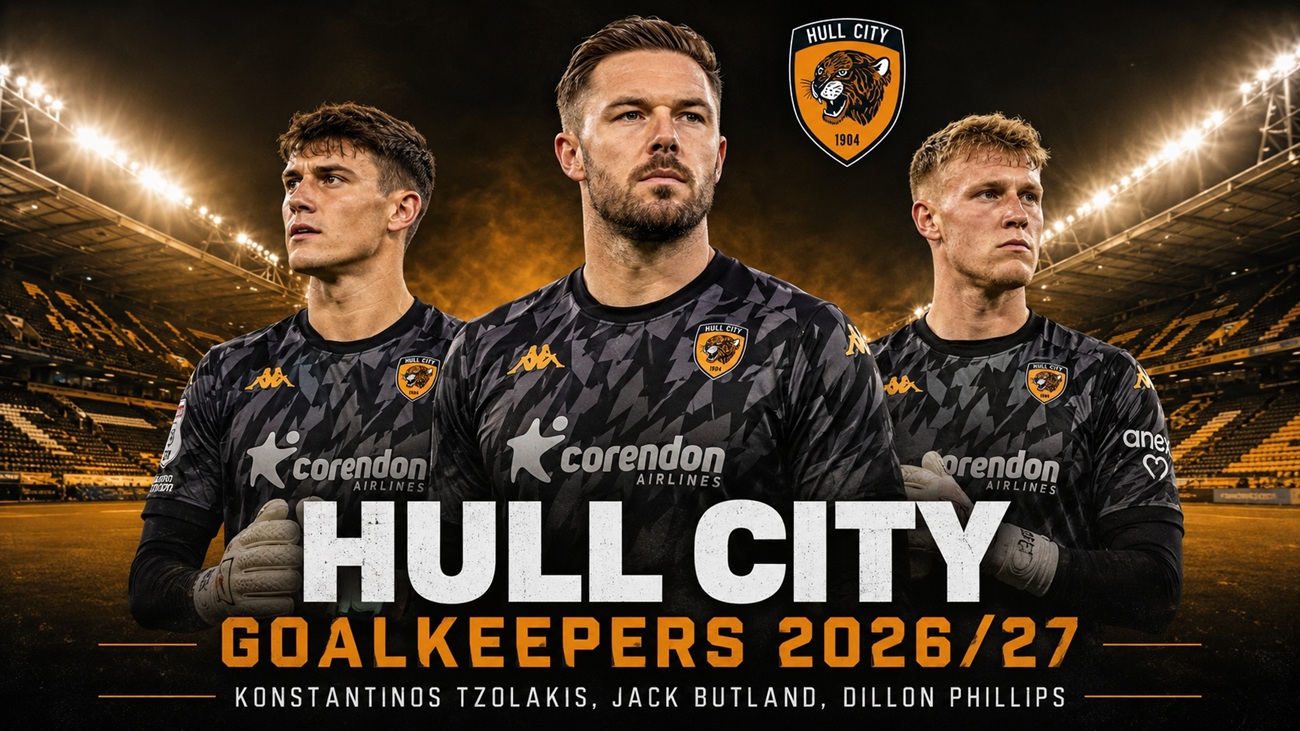
Jack Butland would normally provide unusually experienced competition for a promoted club. However, his arm injury means he is expected to spend a significant period of the opening months unavailable. That leaves Dillon Phillips as the immediate senior backup. The situation should improve considerably once Butland returns, but for now the difference between Hull’s first and second choices is larger than the full squad list suggests.
Depth Assessment: Strong when fully fit; currently Adequate
Defensive Depth
1. Centre-Back Options
Defence was understandably one of Hull’s priorities after promotion. Nobel Mendy is the headline addition and was immediately trusted in the Premier League opener. The Senegalese defender scored against Manchester United before being forced off, although he was fit enough to return to the bench against Stoke three days later.
Semi Ajayi and John Egan started alongside him as Jakirović used a three-centre-back structure. That combination gives Hull physical strength and considerable aerial ability, qualities that should remain important for a team likely to spend periods defending without possession. Charlie Hughes provides another talented option but is currently recovering from injury.
Lucas Herrington has already demonstrated why Hull invested heavily in his potential. The 18-year-old Australian came off the bench against Manchester United and then completed the full League Cup match against Stoke, giving Jakirović evidence that he can contribute sooner than might have been expected.
Paddy McNair adds experience and can play centrally or move into midfield. There are enough options to manage one or two absences once everyone is available. The bigger question is whether the group can consistently handle Premier League pace and movement.
Depth Assessment: Strong for a promoted side
Read Also: Coventry City Squad Depth 2026-27: Strengths, Weaknesses and Season Outlook
2. Full-Back and Wing-Back Options
Captain Lewie Coyle remains central on the right. His leadership and familiarity with Jakirović’s system are valuable, particularly when Hull defend with five and ask the wing-backs to cover large distances. Cody Drameh provides natural competition, while McNair can offer more defensive cover if required.
The left side contains even greater variety. Ryan Giles started the Premier League opener and remains one of Hull’s more natural attacking wing-back options. Matt Targett brings extensive Premier League experience, while Elliot Stroud can operate from deeper or more advanced positions.
That gives Jakirović the ability to alter the balance of his flank depending on the opposition. Giles or Stroud can provide greater attacking ambition, while Targett offers a more conventional experienced full-back profile.
Depth Assessment: Strong
Midfield Depth
Hull’s midfield is more interesting than the opening team against Manchester United suggested. Regan Slater and Matt Crooks provided the central foundation for that victory. Slater offers energy and familiarity with the team’s promotion-winning structure, while Crooks adds physical presence. Hidemasa Morita should raise the technical level significantly.
The Japan international arrived with Champions League experience and multiple Portuguese league titles from his time at Sporting. A calf problem delayed his start to the season, but his appearance from the bench against Stoke suggests he is now moving back into contention.

Lucas Gourna-Douath provides another potentially important defensive option, particularly when Hull need greater athleticism against stronger midfields. Jens Hjertø-Dahl is younger but gives Jakirović size, mobility and another player capable of developing into a Premier League contributor. Kieran Dowell offers creativity from a more advanced starting position and scored in the League Cup tie at Stoke.
The major concern is injuries. Darko Gyabi and Eliot Matazo are dealing with longer-term problems, while Óscar Zambrano is also unavailable. Hull therefore possess substantial midfield numbers, but several cannot currently help. When fit, this should be one of the deeper areas of the squad.
Depth Assessment: Strong on paper; currently Adequate to Strong
Attacking Depth
1. Wide and Creative Options
Mohamed Belloumi remains one of Hull’s most important attacking outlets. His speed and willingness to attack space suit a team that is likely to create many of its best Premier League chances through transitions rather than prolonged possession. Elliot Stroud gives Hull another energetic option capable of operating from the left, while Liam Millar provides additional width and ball carrying.
Abdülkadir Ömür and Kieran Dowell can provide more technical creativity when Hull need to play through compact opponents rather than counterattack. Joe Gelhardt is another useful option because he can operate centrally, behind the striker, or move into attacking spaces from wider positions.
However, Gelhardt’s ankle injury has kept him out of the opening matches. There are credible alternatives here, but Hull do not have an established Premier League creator who can be expected to consistently produce goals and assists.
Depth Assessment: Adequate
2. Centre-Forward Options
Oli McBurnie remains the focal point. His 18 goals during the promotion campaign, including the play-off final winner, demonstrate how important he is to Jakirović’s approach. His value extends beyond scoring.
Against stronger Premier League teams, Hull need someone capable of contesting long passes, occupying centre-backs and allowing midfielders to push forward after possession has been cleared. McBurnie gives them that outlet.
Gelhardt offers a different type of forward once fit, with more mobility between the lines. Enis Destan provides additional specialist centre-forward depth. The issue is quality beyond McBurnie rather than simply numbers. An extended absence for the Scot would force Hull to alter how they progress the ball and attack crosses.
Depth Assessment: Adequate
Read Also: Everton Squad Depth 2026-27: Strengths, Weaknesses and Season Outlook
How Much Quality Is There Beyond the Starting XI?
Hull’s League Cup match at Stoke provided a useful early answer. Jakirović changed all 11 starters from the team that beat Manchester United, and Hull still progressed after a 1-1 draw and penalty shootout. Players including Phillips, Drameh, Herrington, McNair, Targett, Gourna-Douath, Hjertø-Dahl, Ömür, Dowell and Millar all started.
That matters. Those players may not form a Premier League-quality second XI, but they showed that Jakirović has alternatives capable of playing competitive senior football without the team completely collapsing. The larger drop-off comes in the attacking positions, particularly if McBurnie or Belloumi is unavailable.
Where Hull Are Strongest
Central defence is one of the strongest areas for a promoted club. Mendy, Ajayi, Egan, Hughes, Herrington and McNair provide numerous combinations.
Full-back and wing-back depth is also encouraging. Coyle, Drameh, Giles, Targett and Stroud give Jakirović tactical variety on both sides.
Central midfield could become another strength once Morita is fully integrated and injured players begin returning.
The overall squad is stronger defensively than offensively.
Where Hull Look Vulnerable
Attacking depth is the clearest concern. McBurnie remains extremely important to the way Hull play, and Gelhardt’s current absence further reduces the alternatives. The wide areas contain speed and potential, but less proven Premier League end product.
There is also an availability problem in midfield. Hull may have numerous central midfielders under contract, but Matazo, Gyabi and Zambrano cannot currently be counted as usable options. Injuries concentrated within one positional group can quickly turn apparent depth into a shortage.
Key Players for Squad Stability
1. Oli McBurnie
Hull have other forwards, but none gives Jakirović the same combination of physical presence, aerial ability and proven goals within this team.
2. Konstantinos Tzolakis
Butland’s injury increases the importance of Hull’s new No. 1. Tzolakis immediately demonstrated his value against Manchester United and currently has limited experienced competition behind him.
3. Nobel Mendy
Hull invested heavily in Mendy to improve a defence, making the jump from the Championship. His athleticism and ability to defend the penalty area could become crucial across the season.
4. Hidemasa Morita
As he returns to full fitness, Morita has the potential to give Hull a level of midfield composure that was not always available during the promotion campaign.
How Injuries Could Test Hull
Hull are already dealing with a significant injury list. Butland, Hughes, Gyabi, Matazo and Zambrano are unavailable, while Gelhardt has also missed the opening matches. Morita has only just returned to action. That makes Hull’s victories over Manchester United and Stoke more encouraging because Jakirović has already needed to use his squad rather than merely talk about its depth.
The defensive group appears capable of coping with injuries reasonably well. The situation becomes more concerning if absences accumulate in attack. Losing McBurnie while Gelhardt is unavailable would leave Hull particularly short of established forward options.
Fixture Load and Rotation
Hull have no European football, so their schedule is relatively manageable. Their main commitments are the 38 Premier League fixtures alongside the FA Cup and League Cup. That works in their favour. Jakirović can prioritize league survival while using domestic cup matches to provide competitive minutes for players outside the strongest XI.
The Stoke match demonstrated exactly how that approach can work. Hull rested the entire team that had beaten Manchester United while still advancing. They therefore do not need an enormous squad. They need enough reliable cover to survive injuries while keeping their strongest players fresh for the league.
Can Hull’s Squad Handle the Premier League?
The opening victory over Manchester United was an excellent start, but Hull’s survival chances should not be judged from one result. What the match did demonstrate is that Jakirović has a clear structure. Hull defended compactly, accepted having less possession, attacked quickly when opportunities appeared and made set pieces count.
Both goals came from centre-backs, showing how dead-ball situations can provide another route to scoring against technically stronger opponents. The squad has also been upgraded in sensible areas. Tzolakis improves goalkeeping quality, Mendy strengthens the defence, Morita should improve midfield control, and the additional full-back options increase flexibility.
The major question remains attacking output. Hull will need enough goals from McBurnie, Belloumi, Gelhardt and the wider group to make their defensive organisation meaningful.
Where the Squad Could Still Be Strengthened
Another forward would provide the most obvious improvement. Hull have several players capable of contributing in attack, but another Premier League-ready striker or wide attacker would reduce the dependence on McBurnie and provide greater protection while Gelhardt recovers.
The midfield does not necessarily require more numbers. Getting existing players healthy would solve much of the current shortage. Any further recruitment should therefore focus on quality and attacking impact rather than simply increasing the squad size.
Overall Squad Depth Assessment
Overall Assessment: Good Depth for a Promoted Club, but Attack Looks Thinner
Hull have recruited aggressively enough that one or two injuries should not automatically destroy the structure of the team. Defence is well stocked, the full-back positions contain genuine alternatives, and midfield should become strong once injured players return. Attack is less convincing.
McBurnie remains difficult to replace, Gelhardt is currently unavailable, and several of the wide options still need to prove they can consistently produce at Premier League level. For a promoted side without European football, however, Hull have built a competitive squad rather than relying exclusively on the group that won promotion.
Conclusion
Hull City’s 2026/27 squad is deeper and more experienced than the team that came through the Championship play-offs. Konstantinos Tzolakis and Nobel Mendy have immediately strengthened the defensive spine, while Hidemasa Morita should raise the midfield level as he regains fitness.
Matt Targett, Lucas Herrington and several other additions also give Sergej Jakirović useful alternatives. The main weakness is attack, where Oli McBurnie remains particularly important, and Joe Gelhardt’s injury reduces the immediate options.
Hull’s 2-0 victory over Manchester United showed that their strongest team can compete, while the heavily rotated League Cup win at Stoke provided encouraging evidence of usable depth. Overall, Hull appear well stocked for a promoted club. Their ability to stay competitive over 38 matches may ultimately depend on whether the attacking unit can match the resilience already visible in defence.