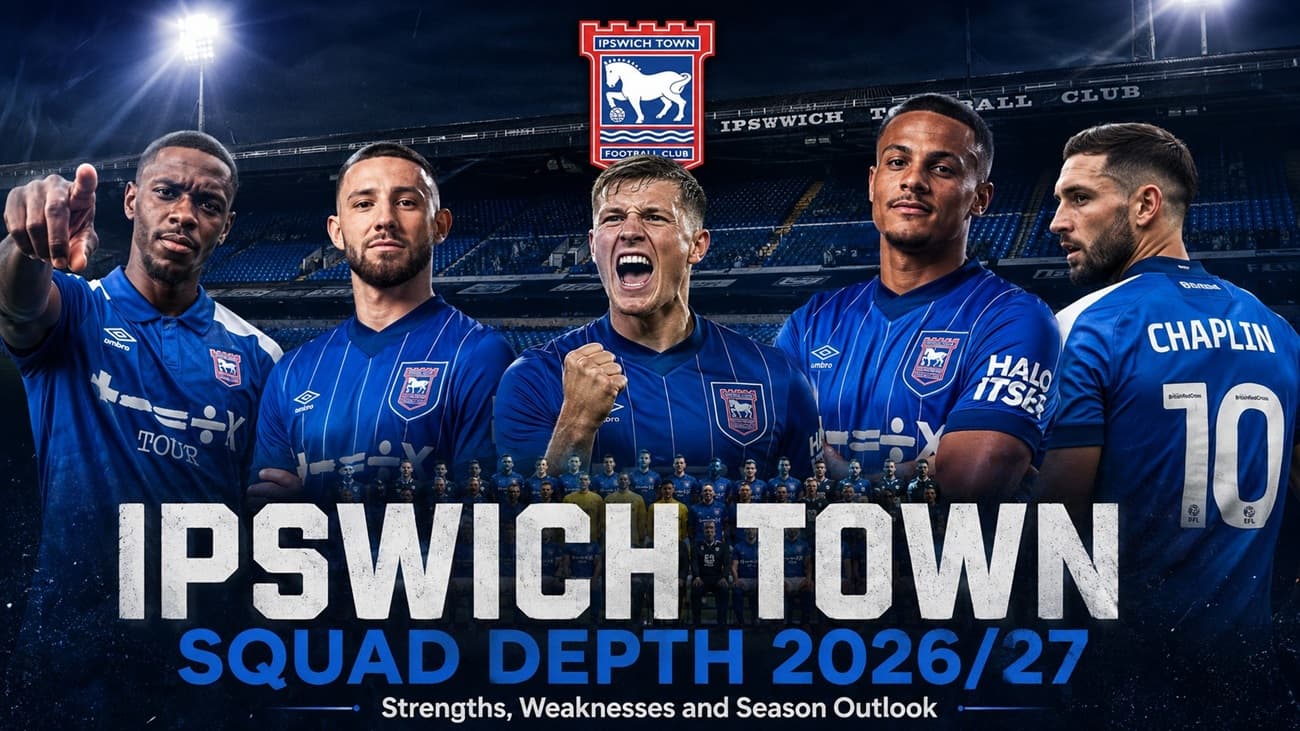
Ipswich Town return to the Premier League with a very different squad from the one relegated in 2024/25. After finishing second in the Championship last season, the Tractor Boys replaced Kieran McKenna with Gary O’Neil and have invested heavily in players with either Premier League experience or the physical and technical qualities required for the step up.
Saša Lukić and Issa Diop have arrived from Fulham, while Florentino Luís strengthens defensive midfield. Daizen Maeda, Abdul Fatawu and record signing Emersonn add speed and attacking threat, and Julio Enciso has returned to Portman Road permanently after previously representing Ipswich on loan.
The early signs have been encouraging. Ipswich opened the Premier League campaign with a 2-1 victory over Sunderland before making substantial changes and beating Leicester City 3-1 in the League Cup. The squad is clearly deeper than during Ipswich’s previous top-flight campaign. The question is whether that depth contains enough Premier League quality to make this return more sustainable.
Read Also: Hull City Squad Depth 2026-27: Strengths, Weaknesses and Season Outlook
Ipswich Town’s 2026/27 Squad at a Glance
Ipswich’s current first-team options include:
Goalkeepers: Kjell Scherpen, Alex Palmer, Christian Walton, Kayne van Oevelen
Right-back/right-sided defence: Darnell Furlong, Ben Johnson, Dara O’Shea, Abdoul Ouattara
Centre-back: Dara O’Shea, Issa Diop, Jacob Greaves, Cédric Kipré
Left-back: Leif Davis, Abdoul Ouattara, Ben Johnson
Central midfield: Saša Lukić, Florentino Luís, Azor Matusiwa, Marcelino Núñez, Jack Taylor, Cameron Humphreys
Wide and attacking midfield: Julio Enciso, Abdul Fatawu, Daizen Maeda, Jack Clarke, Sindre Walle Egeli, Jaden Philogene, Kasey McAteer, Anis Mehmeti
Centre-forward: Emersonn, George Hirst, Chuba Akpom, Ali Al-Hamadi
The transfer window remains open, so further departures or additions are still possible.
Goalkeeper Depth
Kjell Scherpen has immediately moved to the front of the goalkeeper hierarchy. At 6ft 9in, the Netherlands international gives Ipswich exceptional reach and aerial presence, qualities that could prove valuable for a promoted side likely to defend its penalty area frequently against stronger opponents.
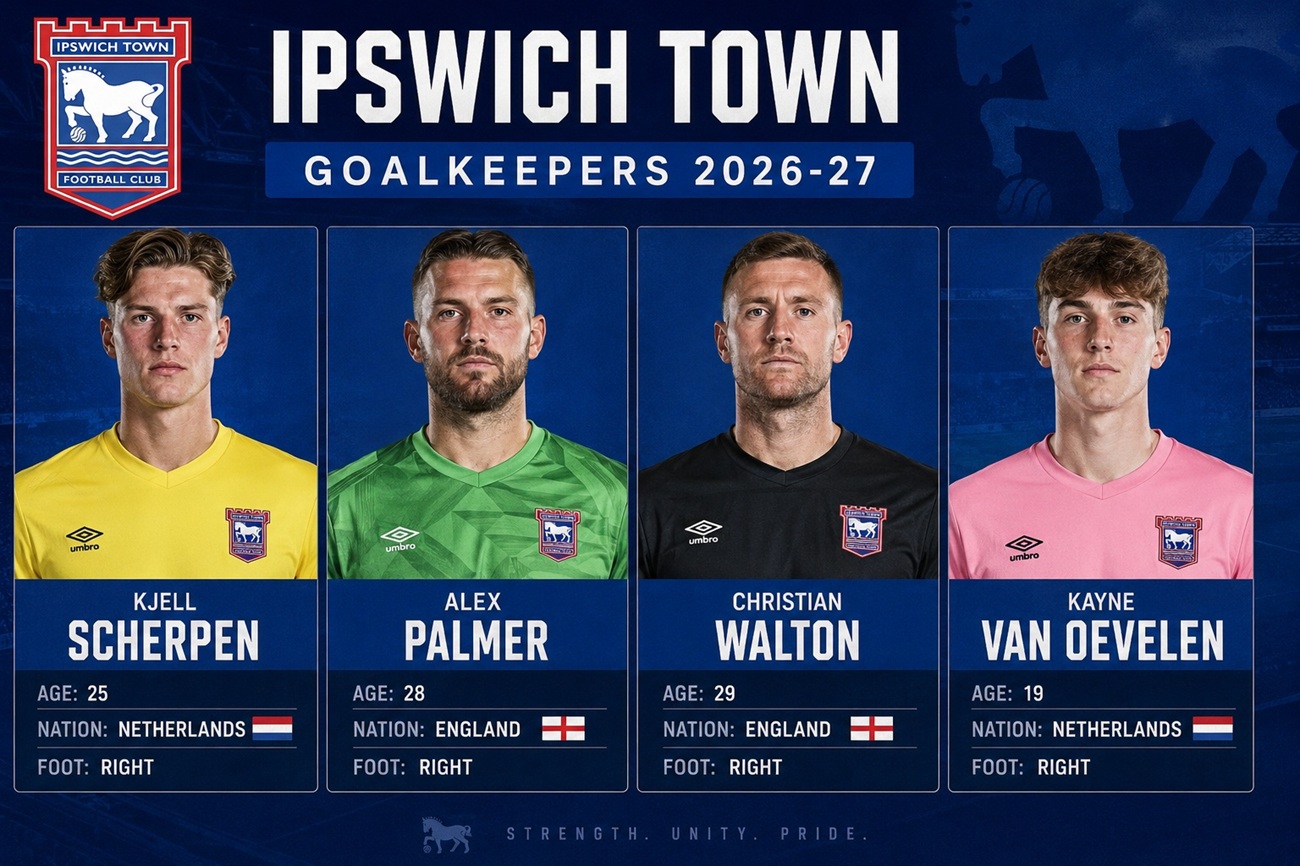
He started the opening Premier League victory over Sunderland, while Christian Walton was trusted for the League Cup win against Leicester. Alex Palmer remains another experienced option, with Kayne van Oevelen providing additional depth. Ipswich therefore have no shortage of goalkeepers. The more important question is whether Scherpen can establish himself as a reliable Premier League No. 1 over a full season.
Depth Assessment: Strong
Defensive Depth
1. Centre-Back Options
Central defence is significantly better equipped than during Ipswich’s previous Premier League campaign. Captain Dara O’Shea remains a key figure and provides leadership and top-flight experience. Issa Diop is an important addition. He arrives with extensive Premier League experience and immediately started alongside O’Shea and Jacob Greaves against Sunderland.
Greaves already experienced Premier League football with Ipswich during 2024/25 and remains comfortable progressing possession from the back. Cédric Kipré provides another senior specialist and started the League Cup victory over Leicester.
That gives O’Neil four established centre-backs before considering players capable of moving across from other positions. Ipswich can therefore absorb one defensive absence without being forced into an emergency partnership. That represents genuine improvement.
Depth Assessment: Strong
Read Also: Fulham Squad Depth 2026-27: Strengths, Weaknesses and Season Outlook
2. Full-Back Options
Leif Davis remains one of Ipswich’s most important attacking defenders. His delivery and willingness to advance down the left were major weapons during both of the club’s recent promotion campaigns. The arrival of Abdoul Ouattara provides more flexibility. Ouattara can operate on either side of defence and also has experience higher up the pitch, giving O’Neil several ways to use him.
On the right, Darnell Furlong and Ben Johnson provide specialist alternatives, while O’Shea can perform a more conservative right-sided role if O’Neil wants additional defensive security. That flexibility should be particularly useful against stronger Premier League opponents, where Ipswich may occasionally move between a back four and back five.
Depth Assessment: Strong
Midfield Depth
This is one of the areas where Ipswich have made the clearest effort to become more Premier League-ready. Saša Lukić brings exactly the kind of experience the squad previously lacked. He is comfortable receiving under pressure, can play in a double pivot and understands the physical demands of England’s top division.
Florentino Luís offers a more defensive profile. His ball-winning and positional discipline should help shield a defence that will inevitably spend periods under pressure. Azor Matusiwa provides another holding option, while Marcelino Núñez brings greater creativity and passing range.
Núñez underlined the value of Ipswich’s second group by scoring twice in the 3-1 League Cup win over Leicester, including an extraordinary long-range effort. Jack Taylor and Cameron Humphreys add further depth.
This is a better-balanced midfield than simply having several similar players. O’Neil can select more defensive combinations against elite opposition or introduce Núñez when Ipswich need greater progression.
Depth Assessment: Strong
Attacking Depth
1. Wide and Creative Options
Attack is where Ipswich have made their most ambitious investments. Julio Enciso gives them a genuine Premier League-level creative talent. His dribbling and ability to receive between midfield and defence immediately added another dimension against Sunderland. He created Emersonn’s opening goal and gives O’Neil a player capable of producing something individually when structured attacks break down.
Abdul Fatawu provides direct running and one-versus-one ability from the right. Daizen Maeda adds exceptional work rate, pressing and movement. He can play wide or move closer to the striker and should fit naturally into an O’Neil side that wants to attack quickly after regaining possession.
Jack Clarke provides another established wide option and scored the 90th-minute winner against former club Sunderland. Sindre Walle Egeli also demonstrated the quality of Ipswich’s rotation options by scoring against Leicester in the League Cup. Jaden Philogene, Kasey McAteer and Anis Mehmeti increase the competition further. For a promoted club, this is an unusually deep collection of wide and attacking players.
Depth Assessment: Very Strong
2. Centre-Forward Options
Emersonn is the major investment. The Brazilian was signed from Toulouse for a club-record fee and immediately scored on his Premier League debut against Sunderland. His physical profile gives Ipswich a striker capable of attacking space while also competing with Premier League centre-backs.
George Hirst remains another useful specialist and already has experience leading the line for Ipswich. Chuba Akpom adds considerable senior experience and started the League Cup match against Leicester, while Ali Al-Hamadi provides another option. The numbers are strong.
The question is proven Premier League goals. Emersonn has started well, but Ipswich still need to discover whether he can consistently produce across 38 matches.
Depth Assessment: Strong
How Much Quality Is There Beyond the Starting XI?
Ipswich’s League Cup victory over Leicester offered an encouraging early test. O’Neil made major changes from the team that defeated Sunderland, bringing in Christian Walton, Darnell Furlong, Cédric Kipré, Abdoul Ouattara, Cameron Humphreys, Sindre Walle Egeli, Kasey McAteer, Marcelino Núñez, Jack Clarke and Chuba Akpom.
Ipswich still won 3-1. That does not mean their second XI is automatically Premier League quality, particularly against a Leicester side currently playing below the top flight. It does show that Ipswich can rotate without relying exclusively on academy players or completely abandoning their competitive level. For a promoted club without European football, that is valuable depth.
Read Also: Coventry City Squad Depth 2026-27: Strengths, Weaknesses and Season Outlook
Where Ipswich Are Strongest
Wide attack and attacking midfield stand out. Enciso, Fatawu, Maeda, Clarke and Egeli give O’Neil pace, creativity, pressing and several different one-versus-one threats.
The centre-back is also much stronger than it was previously. O’Shea, Diop, Greaves and Kipré form a credible group.
Central midfield contains useful variety through Lukić, Florentino, Matusiwa and Núñez.
Ipswich have specifically strengthened the spine of the team rather than merely adding more forwards.
Where Ipswich Look Vulnerable
The largest concern is not an obvious numerical shortage. It is whether enough of the squad can consistently perform at Premier League level. Several summer signings are new to English top-flight football, and O’Neil started seven new players against Sunderland. Developing chemistry will take time.
Left-back also remains heavily dependent on Davis for attacking output. Ouattara can cover the position, but he offers a different profile. Centre-forward is another area where Ipswich have good numbers but limited proven Premier League scoring history. If Emersonn struggles or becomes unavailable, Hirst and Akpom would need to significantly increase their contribution.
Key Players for Squad Stability
1. Saša Lukić
Lukić adds experience and composure to a midfield that needed both. His understanding of Premier League tempo could be especially important during difficult away matches.
2. Julio Enciso
Ipswich have numerous wide attackers, but Enciso offers the most natural individual creativity between the lines.
3. Dara O’Shea
The captain provides leadership and familiarity at the centre of a defence containing several new combinations.
4. Emersonn
Ipswich have invested heavily in their new striker. If he provides consistent goals, several other parts of the team become easier to manage.
How Versatility Strengthens Ipswich
Versatility is another reason the squad looks deeper than a simple positional list suggests. Ouattara can play across the flanks and into midfield. Maeda can operate as a winger or central forward, while Enciso can play as a No. 10 or begin from wider positions.
O’Shea can move between centre-back and right-back, and Ben Johnson can cover both full-back positions if required. O’Neil can therefore adjust his defensive structure without necessarily making several substitutions. That could be important when Ipswich move from proactive home performances to more cautious approaches away against the Premier League’s strongest teams.
How Injuries Could Test the Squad
Ipswich currently appear reasonably well protected in most areas. One centre-back injury should be manageable. The same is true in central midfield and on the wings because of the number of alternatives available. The bigger concerns would come from losing specific profiles.
Davis’ delivery is difficult to replicate. Enciso provides creativity that the other attackers do not reproduce exactly, while Emersonn is being asked to become the primary goalscorer. An injury cluster in one positional group would still expose a promoted squad, but Ipswich are much better prepared for ordinary absences than during their previous Premier League season.
Fixture Load and Rotation
Ipswich do not have European football. Their schedule therefore consists primarily of the 38 Premier League matches alongside the FA Cup and League Cup. That is helpful for a newly promoted team.
O’Neil should usually have full training weeks to prepare his side, while cup matches can provide competitive minutes for players such as Núñez, Egeli, Akpom, Kipré and Furlong. The victory over Leicester has already demonstrated that the second group can contribute. Ipswich therefore do not require further signings simply to increase squad numbers.
Can Ipswich’s Squad Handle the Premier League?
The squad looks considerably better prepared than the one relegated two seasons ago. O’Neil has inherited some players with previous Premier League experience while adding Diop, Lukić and other signings who understand high-level football. Ipswich have also increased their attacking ceiling.
Enciso, Maeda, Fatawu and Emersonn provide more pace and individual quality than a typical promoted side possesses. The 2-1 win over Sunderland was encouraging, but the season will be defined by how Ipswich perform repeatedly rather than one opening result. The biggest test will be maintaining defensive discipline when facing stronger teams while still producing enough goals to turn competitive performances into points.
Overall Squad Depth Assessment
Overall Assessment: Strong Depth for a Promoted Club
Ipswich have built one of the more complete promoted squads in recent seasons. Defence contains Premier League experience, central midfield has several complementary profiles, and the attacking group offers unusual depth.
There are still uncertainties around adaptation and consistent goalscoring, but there is no glaring positional crisis. The squad may still change before the transfer window closes, although additional recruitment should now focus on raising quality rather than adding numbers.
Conclusion
Ipswich Town have learned from their previous Premier League relegation. Instead of relying mainly on the promotion-winning group, they have added experience through Issa Diop and Saša Lukić while substantially upgrading the attacking options with Julio Enciso, Daizen Maeda, Abdul Fatawu and Emersonn.
Attack is currently the deepest area, while centre-back and central midfield look significantly more secure than during Ipswich’s last top-flight campaign. The main question is whether so many new players can develop chemistry quickly and whether Emersonn can provide reliable Premier League goals.
Overall, Gary O’Neil has a squad capable of handling injuries and domestic rotation without an immediate collapse in quality. For a newly promoted club, that gives Ipswich a stronger foundation for survival than they possessed two seasons ago.