
Tottenham Hotspur enter 2026/27 after another major rebuild. Spurs finished 17th in the Premier League for a second consecutive season, with Roberto De Zerbi taking charge during the latter part of 2025/26 and ultimately keeping the club in the division.
Tottenham have since spent heavily to reshape their squad, adding Sandro Tonali, Mateus Fernandes, Andy Robertson, Jan Paul van Hecke, Marcos Senesi, Sávio and Omar Marmoush among others.
The investment has created much stronger competition across defence, midfield and attack. However, Tottenham have started the league season with defeats to Brentford and Newcastle, showing that a deeper squad still needs time to become an effective team.
Read Also: Sunderland Squad Depth 2026-27: Strengths, Weaknesses and Europa League Test
Tottenham’s 2026/27 Squad at a Glance
The main senior options include:
Goalkeepers: Antonin Kinsky, Martin Dúbravka, Brandon Austin
Centre-backs: Micky van de Ven, Jan Paul van Hecke, Marcos Senesi, Kevin Danso, Ben Davies, Kota Takai
Full-backs: Pedro Porro, Destiny Udogie, Andy Robertson, Souza, with Archie Gray able to provide emergency cover
Central midfield: Sandro Tonali, Mateus Fernandes, Conor Gallagher, Rodrigo Bentancur, Lucas Bergvall, Pape Matar Sarr, Archie Gray
Attacking midfield: James Maddison, Xavi Simons, Dejan Kulusevski, Bergvall
Wide attack: Sávio, Mohammed Kudus, Mathys Tel, Wilson Odobert, Mikey Moore
Centre-forward: Dominic Solanke, Omar Marmoush, Richarlison, with Tel capable of playing centrally
Guglielmo Vicario and Radu Drăgușin are currently out on loan, so they should not be counted as usable depth this season.
Goalkeeper Depth
Kinsky currently leads Tottenham’s goalkeeping group, with experienced Slovakia international Dúbravka providing senior competition. That is reasonable depth, although the hierarchy is less proven than at several of Tottenham’s direct rivals.
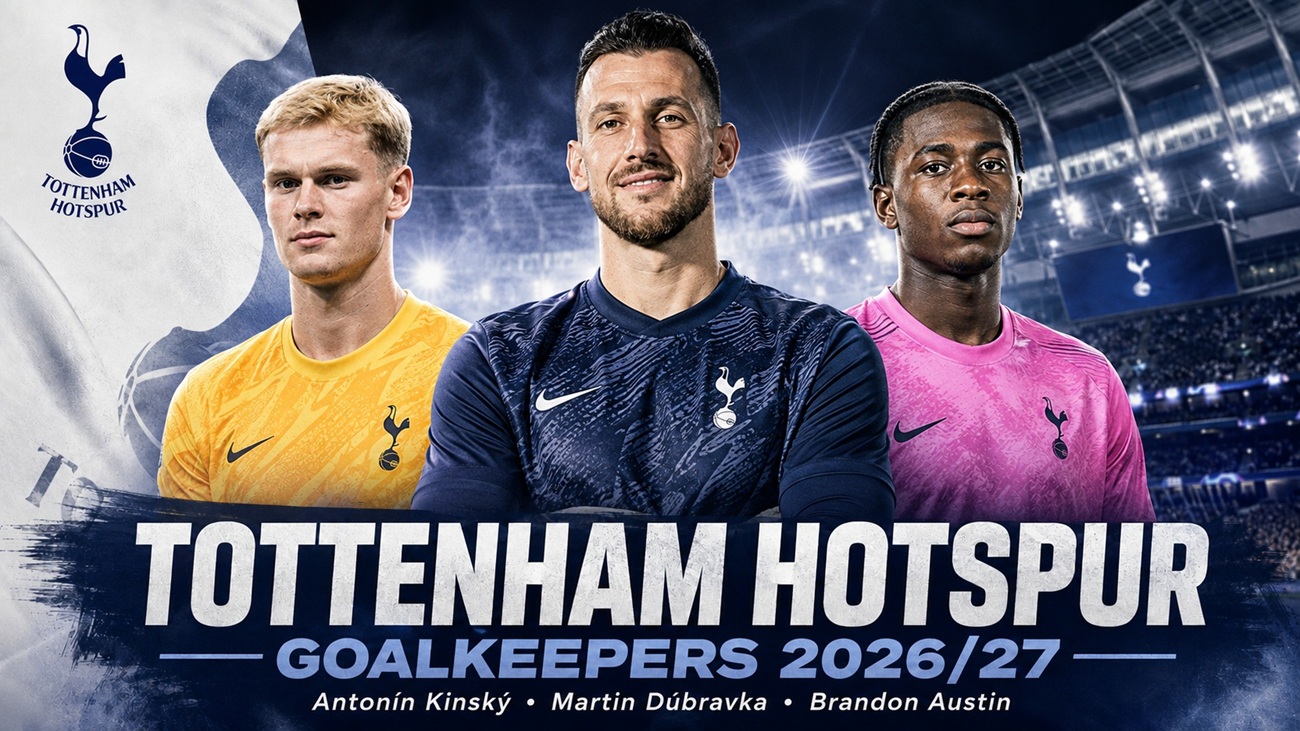
Vicario’s loan departure means Spurs are asking Kinsky to establish himself rather than relying on an experienced long-term Premier League No. 1. Dúbravka reduces the risk because he has extensive top-flight experience. However, there is still a clearer question of quality here than in Spurs’ outfield departments.
Depth Assessment: Adequate
Defensive Depth
Central defence is one of the biggest improvements. Van de Ven remains the most important defender because of his recovery pace, while Van Hecke gives De Zerbi another centre-back comfortable defending aggressively and progressing possession.
Senesi adds left-footed passing and experience, while Danso offers strength and aerial presence. Davies and Takai provide further cover. That gives Tottenham enough options to rotate without forcing midfielders into central defence.
Full-back is also well stocked. Porro remains the main attacking option on the right, while Udogie and Robertson provide two very different choices on the left. Robertson’s experience is particularly useful because Spurs no longer need to depend on Udogie for every important match.
The concern is availability rather than numbers. Porro and Van de Ven both returned only recently after disrupted preparations, making careful workload management important early in the season.
Depth Assessment: Very Strong
Read Also: Nottingham Forest Squad Depth 2026-27: Strengths, Weaknesses and Season Outlook
Midfield Is Tottenham’s Strongest Unit
The addition of Tonali significantly raises the level of the squad. He can dictate possession, press aggressively, and cover large spaces, making him an ideal fit for De Zerbi’s demand for midfielders comfortable receiving under pressure.
Mateus Fernandes adds another technically strong option, while Gallagher provides energy and pressing intensity. Bentancur offers experience and control, with Bergvall, Sarr and Gray giving Tottenham younger alternatives who are already capable of senior minutes.
That depth allows De Zerbi to change midfield profiles rather than simply rotate names. A Tonali-Fernandes combination can prioritise control. Gallagher or Sarr can add more running and pressing. Bentancur can help manage possession, while Bergvall brings greater attacking ambition.
Depth Assessment: Very Strong
Attacking Depth
Tottenham have also invested heavily in attack. Sávio gives Spurs a natural one-versus-one winger capable of stretching a defence. He scored shortly after coming on for his debut against Charlton in the League Cup. Kudus offers power, ball carrying and versatility across the frontline, while Tel provides direct running from the left or through the middle.
Marmoush is another major addition. He can play centrally or from the left and gives De Zerbi a forward who attacks space more aggressively than some of Tottenham’s existing attackers. There is also significant creativity available through Maddison, Simons and Kulusevski when fit.
The problem is that several of those players are currently unavailable or returning from injury. Simons, Kulusevski and Odobert remain sidelined, while Maddison has been managing a shoulder problem. That means Tottenham’s attacking depth on paper is considerably stronger than the group De Zerbi can currently use.
Depth Assessment: Very Strong when fit
Centre-Forward Options
Solanke remains the most natural No. 9. His pressing, movement and ability to occupy centre-backs suit a high-intensity system. Marmoush offers a more mobile alternative, while Richarlison remains capable of leading the line when available.
Tel can also play centrally, although his best role may be as a forward attacking from the left. This gives Tottenham enough striker options without overloading the position. The more important issue is identifying which profile best suits De Zerbi’s preferred attacking structure rather than simply finding cover for Solanke.
Depth Assessment: Strong
Read Also: Manchester United Squad Depth 2026-27: Strengths, Weaknesses and Season Outlook
Where Tottenham Are Strongest
Central midfield is the clearest strength. Tonali, Fernandes, Gallagher, Bentancur, Bergvall, Sarr and Gray give De Zerbi both quality and variety. Centre-back is similarly deep after the arrivals of Van Hecke and Senesi.
The attacking group also has a high ceiling once the injured players return. Sávio, Kudus, Marmoush, Simons, Maddison and Kulusevski offer different combinations of creativity, dribbling and direct running. These are genuine depth strengths because Tottenham can alter their style without necessarily lowering the overall talent level.
Where Spurs Could Be Exposed
Goalkeeper is the least convincing department relative to the rest of the squad. Kinsky may establish himself, but Tottenham currently have less proven top-level certainty there than they do in defence or midfield. The other major issue is availability in attack.
Having Simons, Kulusevski, Maddison and Odobert on the squad list looks impressive. It matters much less when several are simultaneously unavailable. Tottenham also need to avoid confusing squad size with cohesion. De Zerbi has numerous new players who must learn how to press, build possession and defend together. That problem has been visible during the opening defeats.
Players Tottenham Can Least Afford to Lose
Micky van de Ven remains especially important because his pace allows Tottenham to defend higher up the pitch. Sandro Tonali could quickly become the structural centre of De Zerbi’s midfield.
Pedro Porro provides attacking quality from right-back that no other current option replicates exactly. Once fully fit, James Maddison or Xavi Simons will also be important because Tottenham need a reliable central creator to connect their deep midfield with the forwards.
No European Football Changes the Depth Requirement
Finishing 17th means Tottenham have no European competition this season. That should help De Zerbi. Spurs have built a squad that looks deep enough for Champions League-style rotation, yet their actual schedule consists primarily of the Premier League and domestic cups.
That gives the coach more training time and reduces the need to rotate six or seven players every few days. It also means some difficult selection decisions are inevitable once everyone is fit.
Domestic cup matches should be important for players such as Bergvall, Gray, Moore, Takai and Scarlett, but Tottenham simply do not need every senior player to start regularly.
Overall Squad Depth Assessment
Overall Assessment: Very Strong Depth, but Cohesion Is the Bigger Issue
Tottenham’s squad is significantly deeper than the group that struggled through the previous two league seasons. Central midfield and centre-back are now major strengths, while the attack contains numerous players capable of operating in different roles.
The main concerns are goalkeeper certainty, current attacking injuries and the challenge of integrating so many new signings. The early league results show why depth alone is not enough. De Zerbi has the pieces; the important task is turning them into a stable team.
Conclusion
Tottenham’s 2026/27 rebuild has given Roberto De Zerbi far more quality and competition across the squad. Sandro Tonali and Mateus Fernandes strengthen an already deep midfield, while Jan Paul van Hecke and Marcos Senesi improve the defensive rotation. Sávio and Omar Marmoush add further variety to an attack that should become considerably stronger when Tottenham’s injured creators return.
The biggest question is no longer whether Spurs have enough players. They do. The challenge is establishing a clear hierarchy, keeping key attackers available and developing the cohesion required to make one of the Premier League’s deepest squads perform like one.