
Nottingham Forest enter 2026/27 with a new manager, a changed midfield and considerably greater competition in attack.
Oliver Glasner took charge during the summer after Forest finished 16th in the Premier League despite reaching the Europa League semi-finals. His arrival has also influenced recruitment, with Forest adding players suited to the back-three system he used successfully at Crystal Palace.
Ousmane Diomande strengthens central defence, while Xaver Schlager has arrived to help compensate for the major loss of Elliot Anderson to Manchester City. Liam Delap is the headline attacking addition after joining from Chelsea, while Taiwo Awoniyi has left.
Forest’s 2-2 draw at Liverpool on August 29 offered encouraging evidence of the new structure. Dan Ndoye scored, Morgan Gibbs-White converted a penalty, and Delap made an immediate impact from the bench.
The squad has good depth in several areas. The bigger question is whether the quality is distributed evenly enough to move Forest away from another relegation battle.
Read Also: Newcastle United Squad Depth 2026-27: Strengths, Weaknesses and Season Outlook
Nottingham Forest’s 2026/27 Squad at a Glance
The main first-team options currently include:
Goalkeepers: Matz Sels, Steven Benda
Centre-backs: Ousmane Diomande, Murillo, Nikola Milenković, Morato, Jair Cunha
Wing-back/full-back options: Ola Aina, Neco Williams, Nicolò Savona, Luca Netz
Central midfield: Ibrahim Sangaré, Xaver Schlager, Nicolás Domínguez, Ryan Yates
Advanced midfield: Morgan Gibbs-White, James McAtee
Wide attack: Dan Ndoye, Callum Hudson-Odoi, Omari Hutchinson, Dilane Bakwa
Centre-forward: Liam Delap, Igor Jesus, Arnaud Kalimuendo, Chris Wood
The transfer window is still open, so further changes remain possible.
Goalkeeper Depth
Matz Sels remains the established first choice. He has extensive Premier League experience and suits a Forest side that is comfortable allowing opponents periods of possession before attacking quickly after regains.
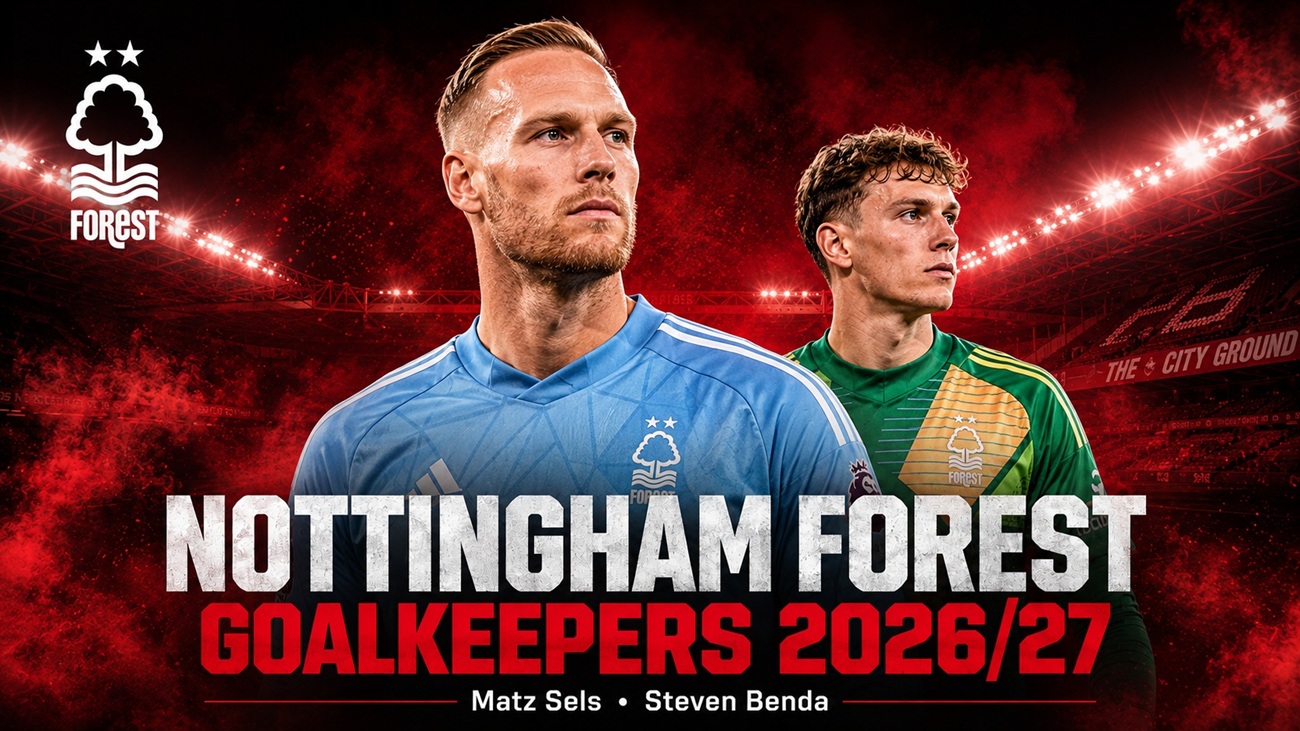
Steven Benda provides senior cover, but there is a clear drop in proven Premier League experience behind Sels. Forest have enough depth for a domestic-only season, although a long-term Sels absence would be significant.
Depth Assessment: Adequate
Defensive Depth
Central defence is one of Forest’s strongest departments. Diomande is an important addition because he already has experience playing in a back three. His athleticism should allow Glasner to defend aggressively without completely abandoning the compact structure that has traditionally suited Forest.
Murillo remains one of the squad’s most important defenders because of his recovery pace and ability to progress the ball from deep. Milenković provides physical strength and aerial presence, while Morato and Jair Cunha give Glasner further alternatives. That is enough depth to rotate three centre-backs without immediately turning to makeshift solutions.
The wing-back positions are also reasonably well stocked. Aina can operate on either side, Williams provides energy and attacking running, Savona adds another right-sided option, and Netz gives Forest a natural left-sided alternative. Glasner’s preferred system places substantial demands on wing-backs, so having several genuine options is particularly important.
Depth Assessment: Very Strong centrally; Strong overall
Read Also: Manchester United Squad Depth 2026-27: Strengths, Weaknesses and Season Outlook
Midfield Depth
The sale of Elliot Anderson created the biggest hole in the squad. Anderson provided ball carrying, pressing and progression, making him difficult to replace with one player.
Schlager brings a different profile. He is aggressive without the ball, experienced at European and international level, and already understands Glasner’s expectations from their previous work together.
Sangaré provides physical presence and defensive coverage, while Domínguez offers greater mobility and technical quality. Ryan Yates remains useful when Forest need intensity, aerial strength and defensive discipline.
The midfield has enough options, but replacing Anderson’s ability to move the team forward may require contributions from several players rather than one direct successor. That places greater creative responsibility on Gibbs-White and McAtee.
Depth Assessment: Strong, but Anderson’s progression is difficult to replace
Attacking Midfield and Wide Options
Forest have considerable variety behind the striker. Gibbs-White remains the central creative figure. He can receive between the lines, carry the ball through midfield and create chances during transitions.
McAtee adds another technically gifted option and was excellent against Liverpool, where he was named player of the match. Ndoye provides direct running and has already opened his Premier League account this season. Hudson-Odoi offers one-versus-one quality from the left, while Hutchinson and Bakwa increase the competition.
This means Forest do not need every attack to run through Gibbs-White. Glasner can select faster transition players against teams that dominate possession or use additional technical quality when Forest expect to control more of the ball.
Depth Assessment: Very Strong
Read Also: Manchester City Squad Depth 2026-27: Strengths, Weaknesses and Season Outlook
Centre-Forward Depth
The arrival of Liam Delap makes striker one of the most competitive areas of the squad. Delap provides strength, running and Premier League experience despite still being only 23. His cameo at Liverpool immediately showed how his physicality can change matches.
Igor Jesus is another strong option and can lead the line while pressing aggressively. Kalimuendo provides greater mobility and can also move into wider attacking positions, while Chris Wood remains an experienced penalty-box striker.
Forest therefore have several natural centre-forwards with different characteristics. The challenge may actually be distributing minutes rather than finding cover. Glasner can use Delap when he wants physical running, Jesus for pressing, Kalimuendo for mobility, or Wood when penalty-box presence and aerial threat are particularly valuable.
Depth Assessment: Very Strong
Where Forest Are Strongest
Centre-back is probably the deepest area. Diomande, Murillo, Milenković, Morato and Cunha give Glasner enough options to commit fully to a back three. Centre-forward is similarly well stocked following Delap’s arrival.
Forest also have strong competition in the attacking positions behind the striker, with Gibbs-White, McAtee, Ndoye and Hudson-Odoi offering different ways to create chances. These are genuine strengths because the alternatives offer different profiles rather than simply additional numbers.
Where Forest Look Vulnerable
Central midfield is the main area to monitor. There are enough players, but Anderson’s departure removed a midfielder capable of winning possession and immediately carrying Forest into attacking territory.
Schlager strengthens the defensive side of the midfield, but Forest still need enough progression from Sangaré, Domínguez and the players ahead of them. Goalkeeper is another position with a clear first-choice hierarchy rather than equivalent depth.
There is also some dependence on Gibbs-White. McAtee reduces that problem considerably, but Gibbs-White remains the player most naturally capable of connecting midfield and attack.
Key Players for Squad Stability
1. Morgan Gibbs-White
Forest have more attacking talent around him, but Gibbs-White remains the main link between midfield and the forwards.
2. Murillo
His pace and ability to defend large spaces are particularly important if Glasner wants his outside centre-backs and wing-backs to play aggressively.
3. Xaver Schlager
Following Anderson’s departure, Schlager’s ability to give Forest midfield intensity and defensive structure could become central to the new system.
4. Liam Delap
Forest do not depend on Delap numerically because they have several strikers, but his combination of age, physicality and Premier League experience gives the attack a new focal point.
Does Forest Have Enough Depth for the Season?
The absence of European football changes the answer considerably. Last season’s Europa League run added a substantial number of midweek fixtures and eventually took Forest to the semi-finals. This season, Glasner can concentrate primarily on the Premier League and domestic cups.
That means he does not need to rotate six or seven starters every week. The squad contains enough centre-backs, attackers and midfielders to handle ordinary injuries and cup rotation comfortably. The bigger task is establishing a clear hierarchy within a group that has undergone another summer of change.
Forest’s 2-2 draw at Anfield was encouraging because it showed that the new structure can create chances against strong opposition while Delap provided additional threat from the bench.
Overall Squad Depth Assessment
Overall Assessment: Strong Depth With a Midfield Question
Nottingham Forest have good squad depth for a club without European football. Defence is particularly well stocked, while the attack now contains several credible options at both centre-forward and in the supporting positions. The biggest uncertainty is midfield.
Anderson was a major player, and Forest may need Schlager, Sangaré, Domínguez, Gibbs-White and McAtee collectively to replace everything he contributed. If that midfield balance works, Glasner has enough quality elsewhere to avoid becoming overly dependent on a small group of starters.
Conclusion
Nottingham Forest’s 2026/27 squad is stronger in defence and attack than their 16th-place finish last season might suggest. Ousmane Diomande gives Oliver Glasner another high-level centre-back suited to his preferred system, while Liam Delap joins an already deep collection of forwards. Gibbs-White and McAtee provide creativity behind them.
The key issue is central midfield following Elliot Anderson’s departure. Forest have replaced numbers and defensive intensity, but replacing his progression will require a collective solution.
Without European fixtures stretching the squad, Forest have enough depth for their domestic workload. Their season is more likely to depend on how quickly Glasner finds the right midfield balance than on any major shortage of players.