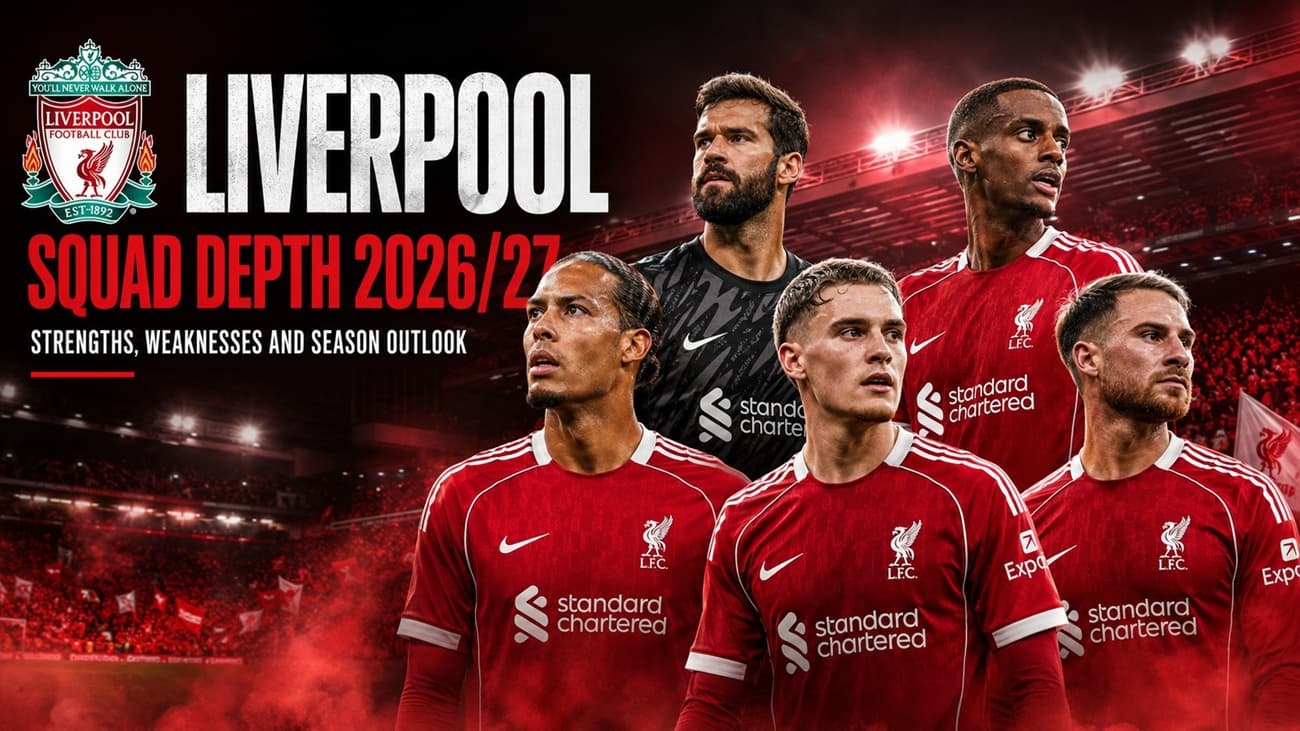
Liverpool enter 2026/27 in the middle of a significant transition. Andoni Iraola has replaced Arne Slot after Liverpool finished fifth last season and qualified for the Champions League. Mohamed Salah, Andy Robertson and Ibrahima Konaté have departed, while Curtis Jones has subsequently joined Inter Milan. Those exits have removed three long-established starters and an important midfield rotation player.
Liverpool have responded by adding centre-back Jérémy Jacquet, Spain forward Víctor Muñoz and Ronald Araújo on loan from Barcelona. The squad still contains elite talent through Alisson, Virgil van Dijk, Florian Wirtz, Alexander Isak and others, but injuries have reduced Iraola’s immediate options.
Their opening 2-2 draw at Newcastle illustrated both sides of the current squad: enough attacking quality to recover a result, but defensive and attacking areas that remain short of established alternatives.
Read Also: Bradley Barcola to Liverpool Latest Transfer News: Reds Reach Agreement in Principle With PSG
Liverpool’s 2026/27 Squad at a Glance
Liverpool’s main current options include:
Goalkeepers: Alisson Becker, Giorgi Mamardashvili
Centre-backs: Virgil van Dijk, Jérémy Jacquet, Ronald Araújo, Joe Gomez, Giovanni Leoni
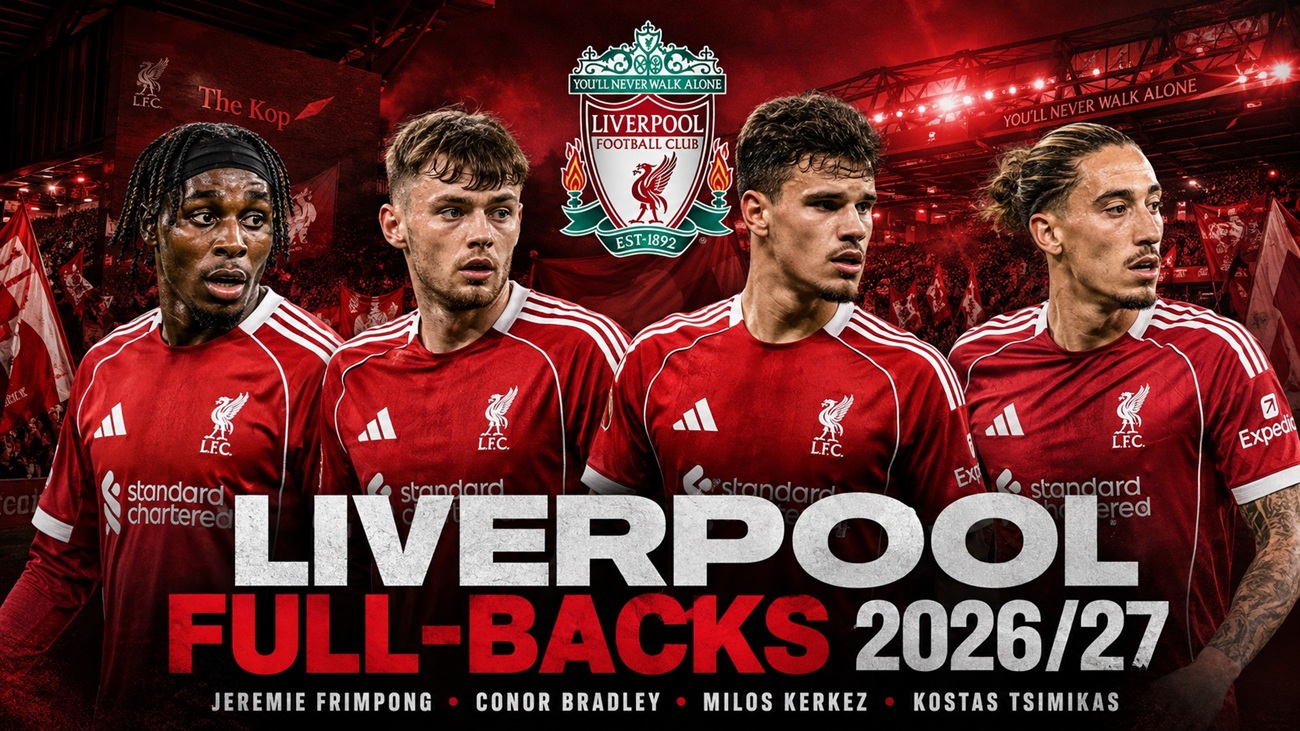
Full-backs: Jeremie Frimpong, Conor Bradley, Milos Kerkez, Kostas Tsimikas
Central midfield: Ryan Gravenberch, Alexis Mac Allister, Dominik Szoboszlai, Wataru Endo, Stefan Bajcetic, Trey Nyoni, James McConnell
Advanced midfield: Florian Wirtz, Szoboszlai, Harvey Elliott
Wide attack: Cody Gakpo, Rio Ngumoha, Víctor Muñoz, Federico Chiesa
Centre-forward: Alexander Isak, Hugo Ekitike
Several of those players are not currently available. Bradley, Ekitike and Leoni remain out with long-term injuries, while Gomez has also missed the start of the season. Chiesa is now unavailable with a minor muscle injury.
Goalkeeper Depth
Goalkeeper is one of Liverpool’s strongest positions. Alisson remains the first choice and combines elite shot-stopping with the ability to defend space behind an aggressive defensive line.
Mamardashvili gives Iraola an unusually strong No. 2. He played important Champions League matches last season when Alisson was unavailable and is capable of starting without forcing Liverpool to fundamentally alter how they play. There is still a difference between Alisson and almost any replacement, but Liverpool are far better protected here than most clubs.
Depth Assessment: Very Strong
Defensive Depth
Central defence has been rebuilt after Konaté’s departure. Van Dijk remains the leader, while Jacquet started alongside him on the opening weekend at Newcastle. The 21-year-old has been signed with a long-term role in mind, but expecting him immediately to reproduce Konaté’s consistency would be unrealistic.
Araújo provides the experienced alternative. His arrival on loan is important because he has more than 200 Barcelona appearances and can play centrally or from the right. The difficulty is availability.
Gomez remains sidelined, and Leoni is still recovering from the ACL injury suffered last season. Liverpool therefore have more centre-back depth on paper than they can currently use. A fit group of Van Dijk, Jacquet, Araújo, Gomez and Leoni would be strong. Right now, another defensive injury would quickly make the position uncomfortable.
At full-back, Frimpong gives Iraola an extremely aggressive right-sided option. Bradley should provide competition when he returns from knee surgery, but until then there is little specialist cover behind Frimpong. Kerkez is established on the left, with Tsimikas providing experienced backup following Robertson’s departure.
Depth Assessment: Strong when fit; currently reduced by injuries
Read Also: Leeds United Squad Depth 2026-27: Strengths, Weaknesses and Season Outlook
Midfield Depth
Midfield is Liverpool’s most secure outfield department. Gravenberch remains capable of controlling deeper areas, while Mac Allister provides passing quality and tactical intelligence. Szoboszlai brings pressing intensity, ball carrying, and goal threat. Wirtz gives Iraola an elite creator capable of operating between midfield and attack.
Behind them, Endo provides experienced defensive cover, while Nyoni, Bajcetic and McConnell offer younger alternatives. Jones’ departure reduces the number of proven senior rotation players, but it does not create an obvious shortage.
Liverpool can still lose one central midfielder without completely changing the structure of the team. The bigger issue would come if injuries were concentrated among Gravenberch, Mac Allister and Szoboszlai simultaneously.
Depth Assessment: Very Strong
Attacking Depth
This is currently Liverpool’s biggest concern. Salah’s departure removed a player who combined goals, creativity and durability on the right wing. Liverpool have not yet replaced all three qualities. Gakpo remains an established left-sided attacker and started at Newcastle.
Ngumoha has made rapid progress and was trusted from the start in the season opener, but he is still a young player. His emergence is valuable; relying on him every week would be a different matter.
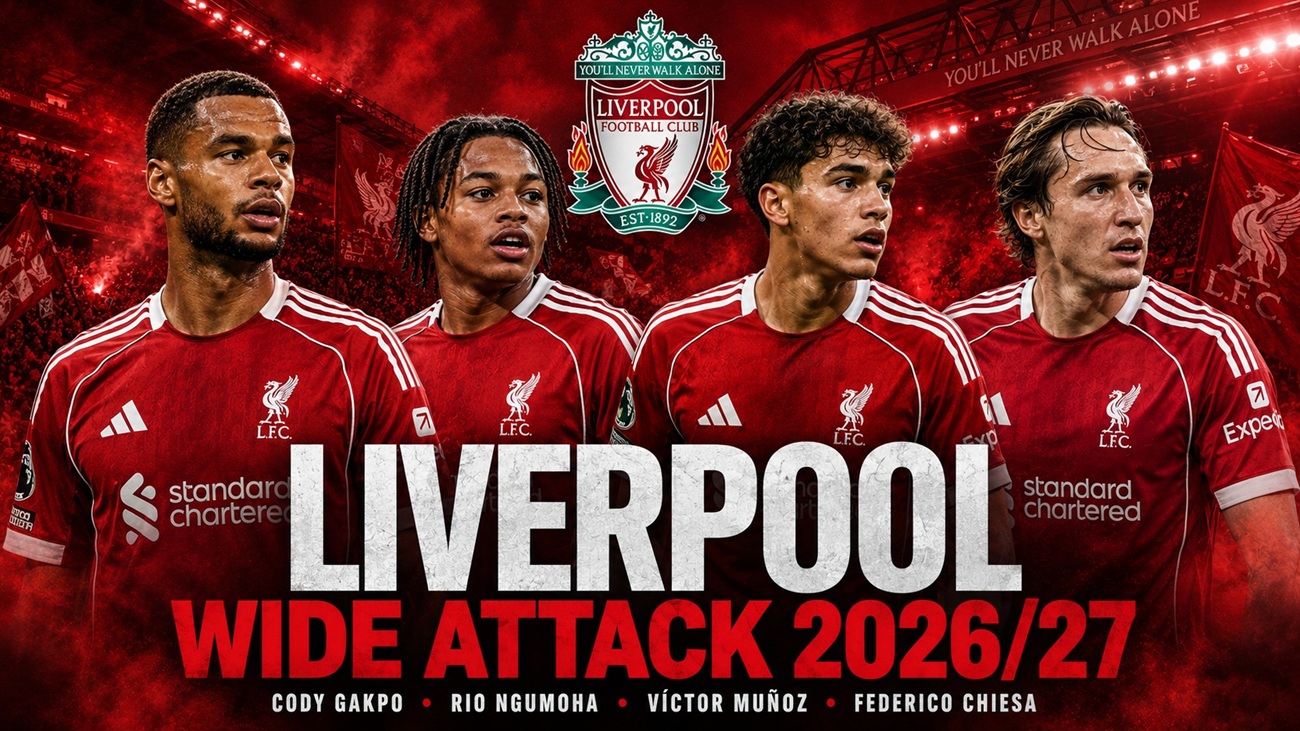
Víctor Muñoz provides another option after arriving from Osasuna following a seven-goal, five-assist season in Spain. He can play across the attack and adds useful flexibility. Chiesa would normally improve the senior rotation, but his current muscle injury removes another option. That leaves Liverpool unusually thin on the wings for a club competing in the Champions League.
Reports on August 27 indicate that Liverpool are close to a major deal for PSG winger Bradley Barcola. Iraola has acknowledged the club’s need for more wide attacking quality, but until the transfer is formally completed, Barcola cannot be counted as Liverpool squad depth.
Depth Assessment: Thin for Liverpool’s competitive demands
Read Also: Ipswich Town Squad Depth 2026-27: Strengths, Weaknesses and Season Outlook
Centre-Forward Depth
Alexander Isak is currently carrying considerable responsibility. He is Liverpool’s leading available specialist centre-forward and started at Newcastle.
Normally, Hugo Ekitike would give Iraola a high-quality alternative and allow Liverpool to use two different striker profiles. His Achilles rupture, however, means he remains unavailable for an extended period.
Muñoz or Gakpo can operate through the middle if required, but neither should be viewed as a direct replacement for a specialist No. 9. Liverpool therefore have excellent centre-forward quality but limited immediately available depth.
Depth Assessment: Thin while Ekitike is injured
Where Liverpool Are Strongest
Central midfield is the clearest strength. Gravenberch, Mac Allister, Szoboszlai and Wirtz allow Iraola to select different combinations without sacrificing technical quality. Goalkeeper is similarly secure because Mamardashvili provides genuine high-level cover for Alisson.
Liverpool’s first-choice spine also remains excellent. Van Dijk, Wirtz and Isak give Iraola elite players through defence, midfield and attack. The concern is what happens around that spine when injuries accumulate.
Where Liverpool Look Vulnerable
Wide attack is the obvious weakness. Salah is gone, Chiesa is injured, and Liverpool are currently asking young players such as Ngumoha to carry meaningful Premier League responsibility.
Centre-forward depth is also reduced while Ekitike recovers. Defence presents a similar short-term issue. Jacquet and Araújo strengthen the group, but Gomez, Bradley and Leoni are unavailable. Liverpool therefore have a strange depth profile: a very strong theoretical squad with several important areas temporarily compressed by injuries.
Key Players Liverpool Can Least Afford to Lose
Virgil van Dijk remains especially important because the centre-back group around him is changing and currently short of available experience.
Ryan Gravenberch gives Liverpool control and physical coverage through central midfield.
Florian Wirtz provides the creative quality needed to unlock compact opponents.
Alexander Isak is arguably the most difficult player to replace right now because Ekitike is unavailable and Liverpool have no equivalent senior No. 9 behind him.
Champions League Rotation Will Test the Squad
Liverpool’s fifth-place finish secured direct entry into the Champions League league phase, where they will play eight matches before any knockout football is considered. That changes the depth requirement considerably.
Iraola cannot expect Van Dijk, Frimpong, Wirtz, Gakpo and Isak to play every major Premier League and Champions League fixture. The midfield looks capable of handling that rotation. The same confidence does not currently exist in defence and attack.
Liverpool should become much stronger as injured players return, and another winger would immediately improve the balance. Until then, the early months could place significant pressure on several starters.
Read Also: Hull City Squad Depth 2026-27: Strengths, Weaknesses and Season Outlook
Overall Squad Depth Assessment
Overall Assessment: Strong Squad, but Currently Unbalanced
Liverpool still possess enough elite-level talent to compete at the top end of the Premier League and in the Champions League. Goalkeeper and midfield are particularly strong. Jacquet and Araújo have helped rebuild central defence following Konaté’s exit, while Isak remains an elite centre-forward.
The weaknesses are concentrated in the attack and in current defensive availability. Liverpool have lost Salah’s extraordinary reliability, Ekitike remains injured, and the wide options are thinner than expected for a Champions League club.
If the reported Barcola move is completed and Liverpool regain Bradley, Gomez and Leoni, the depth picture changes considerably. As the squad stands now, Iraola has a strong first team but less room for injuries in several important positions than Liverpool would ideally want.
Conclusion
Liverpool’s 2026/27 squad has elite quality but is still adjusting to significant change. Andoni Iraola has inherited an outstanding midfield and two high-level goalkeepers, while Jérémy Jacquet and Ronald Araújo help rebuild the defence after Ibrahima Konaté’s departure.
The main concern is attack. Salah has left, Ekitike is injured, and Liverpool currently lack the established wide depth expected of a club competing in both the Premier League and Champions League.
The squad should become considerably healthier as long-term absentees return. For now, however, Liverpool’s depth is strongest through the middle and much less convincing at the edges of the team.