
Barcelona begin 2026/27 as defending La Liga champions with a squad that has changed significantly despite retaining many of Hansi Flick’s most important players. Rodri, Anthony Gordon, Karim Adeyemi and João Cancelo are the headline additions. Robert Lewandowski has left after four seasons, Ferran Torres has joined Paris Saint-Germain and Ronald Araújo is spending the season on loan at Liverpool.
Marc-André ter Stegen and Iñaki Peña have also departed the immediate goalkeeping picture. The result is an unusual squad-depth profile. Barcelona are extraordinarily well stocked in midfield and wide attacking positions. Their first-choice defence also remains strong.
What they have less of is specialist cover: there is no established traditional No. 9 replacing Lewandowski, and Araújo’s exit has reduced the number of proven natural centre-backs. That distinction will matter because Barça are defending their league title while also playing another eight-match Champions League league phase.
Read Also: Atlético Madrid Squad Depth 2026-27: Strengths, Weaknesses and Season Outlook
Barcelona’s 2026/27 Squad at a Glance
Barcelona’s main first-team options currently include:
Goalkeepers: Joan García, Wojciech Szczęsny; Dominik Livaković has also signed but was not included in the squad for the August 31 match against Rayo Vallecano
Right-back: Jules Koundé, João Cancelo, Eric García, Xavi Espart
Centre-back: Pau Cubarsí, Andreas Christensen, Eric García, with Koundé and Gerard Martín capable of covering
Left-back: Alejandro Balde, Gerard Martín, João Cancelo
Central midfield: Rodri, Pedri, Frenkie de Jong, Gavi, Marc Casadó, Marc Bernal
Advanced midfield: Dani Olmo, Fermín López, Pedri, Gavi
Wide attack: Lamine Yamal, Raphinha, Anthony Gordon, Karim Adeyemi, Roony Bardghji, Jesse Bisiwu
Centre-forward alternatives: Adeyemi and Gordon can both operate centrally, while Barça Atlètic striker Hamza Abdelkarim offers a younger specialist option
Barcelona’s official first-team list confirms just how heavily the squad is weighted toward midfielders and flexible forwards rather than specialist strikers.
Goalkeeper Depth
Joan García has become the senior first-choice option following ter Stegen’s loan departure. Szczęsny gives Flick experienced cover and is more than capable of handling Copa del Rey matches or periods when Joan García is unavailable.
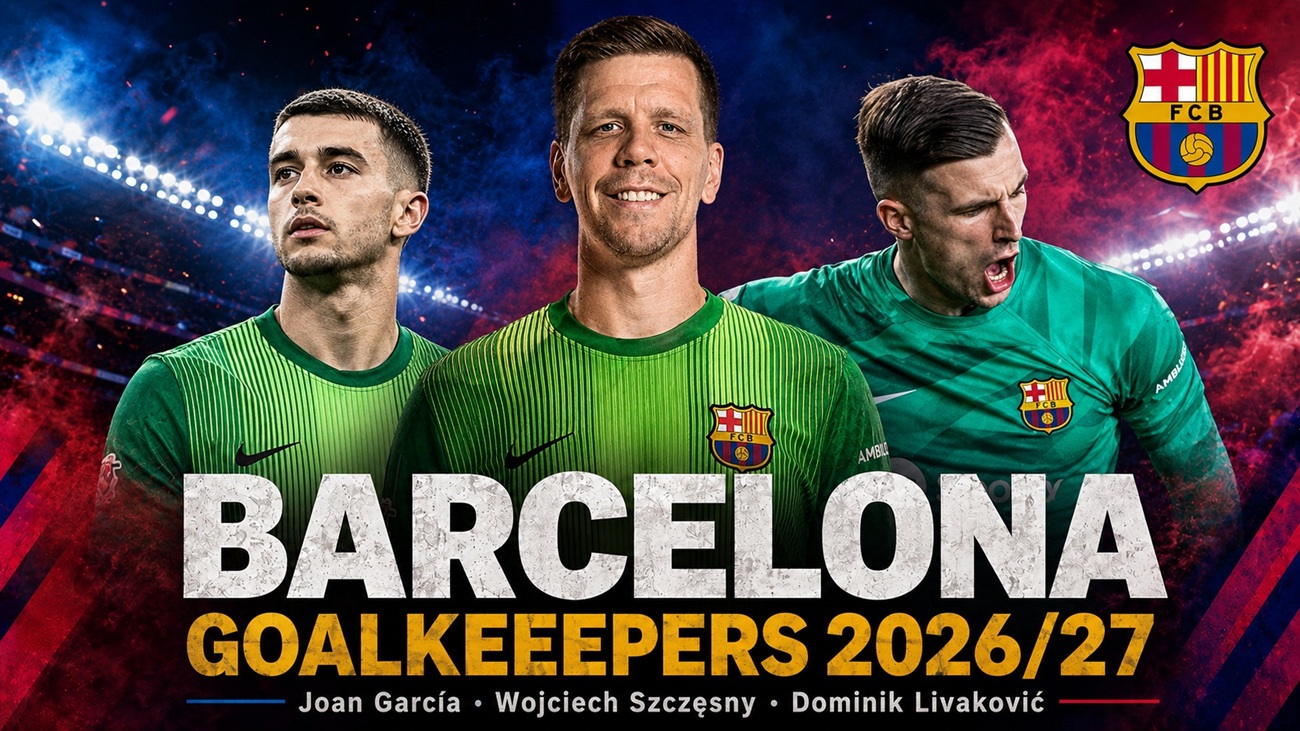
Barcelona have also signed Croatian international Dominik Livaković from Fenerbahçe. However, he was not among the 22 players selected for the Rayo Vallecano match and had not yet appeared on the club’s main first-team squad page at the time of writing.
His arrival potentially makes goalkeeper one of Barça’s deeper positions, but his immediate place in the hierarchy is still being established. Even without depending on Livaković immediately, Barça have experienced senior cover.
Depth Assessment: Strong
Read Also: Athletic Club Squad Depth 2026-27: Strengths, Weaknesses and Season Outlook
Defensive Depth
Barcelona’s first-choice defence is strong. The concern comes after injuries begin to accumulate. Cubarsí is already one of the most important defenders because of his positioning, composure and ability to progress possession from the back.
Christensen provides experience, while Eric García has become particularly useful because he can play centrally, at right-back or step into midfield. Koundé is primarily a right-back under Flick but remains capable of playing centre-back. Gerard Martín can also cover centrally from the left.
The problem is that Araújo’s loan departure removes a natural senior centre-back with a different physical profile. Barça still has enough defenders to handle one absence, but two simultaneous centre-back injuries could force Flick to move Koundé or another versatile player away from their strongest role. Full-back is better covered.
Balde provides speed and width on the left, while Cancelo’s return gives Flick an experienced player capable of operating on either side and moving inside during possession. Koundé remains the more defensively secure right-back. That means Barcelona can change the characteristics of the full-back position depending on the opponent.
Depth Assessment: Strong overall, but centre-back is thinner than the raw defensive numbers suggest
Midfield Is Barcelona’s Deepest Area
Rodri’s arrival changes an already exceptional midfield. The Spain international gives Flick a natural controlling midfielder capable of protecting transitions and dictating possession. Barcelona confirmed his signing from Manchester City on August 18, and he returned to full group training before the league opener.
Behind and around him, the options are extensive. Pedri remains the outstanding controller between deeper midfield and attack. De Jong offers carrying and progression. Gavi provides intensity, pressing and aggressive movement into advanced areas.
Casadó and Bernal give Flick two younger defensive-midfield options, while Fermín and Olmo provide considerably more goal threat close to the penalty area. This is true squad depth because the players are not simply copies of each other.
Flick can use Rodri when he wants maximum control, de Jong to carry possession, Gavi to increase pressing intensity, or Fermín and Olmo when Barcelona need more runners into the box. The biggest challenge may actually be distributing minutes rather than finding cover.
Depth Assessment: Elite
Read Also: Deportivo Alavés Squad Depth 2026-27: Strengths, Weaknesses and Season Outlook
Wide Attack Has Become Even Deeper
Lamine Yamal and Raphinha remain the established reference points. Lamine provides elite one-versus-one creativity from the right, while Raphinha combines movement, pressing, crossing and goals from the opposite side. Barcelona have now added two established alternatives.
Anthony Gordon brings Premier League experience, direct running and defensive work rate. Barcelona specifically noted when signing him that he can also operate through the middle. Adeyemi provides even greater pace and is capable of playing on either wing or as a centre-forward.
Bardghji gives Flick another left-footed right-wing option, while 18-year-old Bisiwu adds further one-versus-one potential but should still be judged as a developing player rather than equivalent cover for Lamine or Raphinha. Barcelona can therefore rotate a winger without completely losing their ability to attack defenders directly.
Depth Assessment: Elite
The No. 9 Question
This is the most interesting weakness in Barcelona’s current squad. Lewandowski has left after scoring 119 goals in 191 appearances for the club, while Ferran Torres has been transferred to PSG. Barcelona have not replaced them with another established traditional centre-forward.
Adeyemi can play through the middle and has done so during his career. Gordon has also operated at centre-forward. Raphinha and Olmo give Flick further possibilities if he wants to use a fluid attacking structure. Those are legitimate tactical solutions.
They are not the same as having a specialist penalty-box striker. Hamza Abdelkarim is a natural young forward and has already been included in senior matchday squads, but expecting an 18-year-old to replace Lewandowski’s role immediately would be unrealistic. He remains a developmental option rather than proven elite depth.
This does not necessarily make Barcelona’s attack weak. It means the attack may function differently. Against teams defending deep around their own penalty area, the absence of an established No. 9 could become more noticeable than it is during open matches.
Depth Assessment: Strong attacking alternatives, but Thin in specialist centre-forward depth
Why Barcelona’s Versatility Matters
Flick can solve many squad problems without making direct position-for-position substitutions. Cancelo can play either full-back position. Eric García can move between centre-back, right-back and midfield. Gordon and Adeyemi can both play wide or centrally.
Pedri, Gavi and Olmo can operate at different midfield heights depending on the system. That flexibility makes the squad appear even deeper. However, it also explains where Barcelona must be careful. Versatility should not disguise specialist shortages.
Using Koundé at centre-back solves one problem but creates another at right-back. Playing Gordon through the middle gives Flick a striker option, but removes one of the main wide alternatives. The squad is exceptionally flexible; it is not equally deep in every specialist role.
Which Players Would Be Hardest to Replace?
Lamine Yamal is the clearest example. Barcelona have several excellent wingers, but none reproduces his combination of close control, chance creation and ability to unbalance compact defences.
Pedri remains similarly important because he determines the rhythm and direction of possession in a way few midfielders can match.
Cubarsí has become particularly valuable after Araújo’s departure because Barcelona have fewer natural centre-backs behind him.
Rodri could also become structurally important very quickly if Flick builds the midfield around his ability to control transitions.
Champions League Football Will Use the Depth
Barcelona’s Champions League league-phase opponents are Manchester City, PSG, Aston Villa, Sporting CP, Feyenoord, Galatasaray, Como and Sabah. The schedule begins against Feyenoord on September 9 and will repeatedly create midweek matches around La Liga fixtures.
Midfield and winger rotation should be relatively straightforward. Flick can rest one or two major players and still select internationals or high-level young players. Centre-back and centre-forward require more careful management.
Barcelona will not want Cubarsí or the remaining natural central defenders carrying excessive workloads, while the absence of a conventional senior No. 9 means Flick may have to rotate attacking structures rather than simply rotate strikers. That is where the squad’s tactical flexibility becomes especially important.
Overall Squad Depth Assessment
Overall Assessment: Elite Depth With Two Specialist Gaps
Barcelona have one of the deepest midfields and collections of wide attackers in European football. Rodri joins Pedri, De Jong, Gavi, Casadó, Bernal, Fermín and Olmo, while Lamine, Raphinha, Gordon and Adeyemi give Flick numerous high-level attacking combinations.
The weaknesses are specific. Araújo’s departure has reduced natural centre-back depth, while Lewandowski and Ferran leaving means Barcelona no longer have an established senior specialist No. 9.
Those limitations do not outweigh the quality elsewhere, but they could become important if injuries are concentrated in defence or Barcelona encounter matches that demand a more conventional penalty-box striker.
Conclusion
Barcelona’s 2026/27 squad is exceptionally deep, but not because every position contains two identical players. Its strength is flexibility. Hansi Flick can choose between different midfield structures, rotate elite-quality wingers and alter the way his full-backs operate without dramatically weakening the team.
Rodri adds another world-class midfield profile, while Anthony Gordon and Karim Adeyemi reduce the workload pressure on Lamine Yamal and Raphinha.
The areas to monitor are much clearer: natural centre-back depth after Araújo’s loan and specialist centre-forward depth after Lewandowski and Ferran Torres departed.
For La Liga and Champions League competition, Barcelona have more than enough overall quality. Their biggest test will be whether tactical versatility can compensate when the squad lacks a natural specialist for a particular problem.